

Why Granite Is the Preferred Material for Headstones

Key Takeaways Granite is chosen for many memorials because it combines strength, legibility, visual variety, and manageable care. The right stone still depends on cemetery rules, family preferences, design choices,…
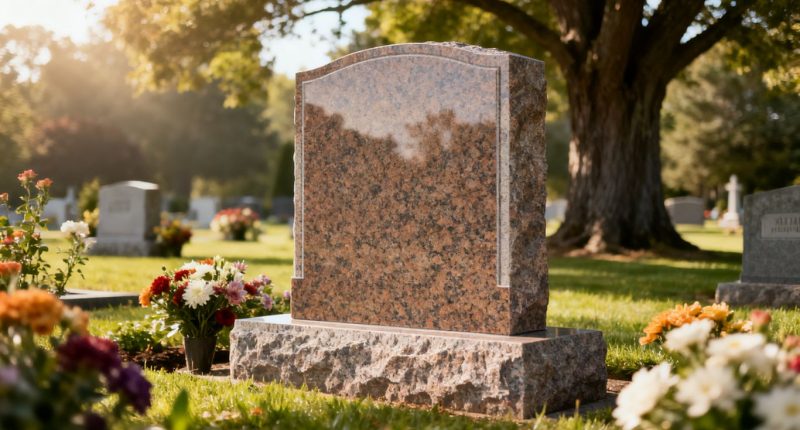
Key Takeaways
Granite is chosen for many memorials because it combines strength, legibility, visual variety, and manageable care. The right stone still depends on cemetery rules, family preferences, design choices, and budget.
- Granite resists ordinary weathering and keeps inscriptions readable for many years.
- Colors, finishes, shapes, and personal details can be combined in many ways.
- Cost depends on the stone, size, thickness, lettering, accessories, and installation.
- Cemetery requirements should be confirmed before a design is finalized.
- Gentle cleaning and timely professional care help preserve the memorial.
What makes granite a preferred material for headstones
When families ask why granite for headstones, they are usually balancing permanence with beauty. A memorial must stand outdoors through changing seasons while still feeling personal and appropriate. Granite answers both needs with a naturally hard surface and a broad range of colors and designs. Its practical qualities matter, but so does the quiet dignity it brings to a cemetery setting.
Natural strength and resistance to weather
Granite is an igneous rock formed under intense heat and pressure, which gives it a dense, durable structure. Outdoors, that density helps the stone withstand rain, freezing temperatures, sunlight, and ordinary seasonal changes. It is not immune to damage, but it generally offers dependable resistance when properly selected, finished, and installed.
The stone’s strength also gives families flexibility in the form of the memorial. A flat marker, slant marker, bench, or upright headstone can be made with a substantial presence without relying on a fragile surface. The result is a tribute designed for a particular place rather than a temporary decorative object.
Long-term readability of inscriptions
A headstone carries names, dates, and words that families may return to for generations. Granite provides a stable surface for engraved lettering, allowing the inscription to remain clear when the stone is prepared and maintained appropriately. Darker granite can create especially strong contrast, while lighter stones offer a softer appearance.
Readability depends on more than the material alone. Letter size, spacing, font, engraving depth, finish, and the position of the inscription all influence how easily someone can read it in bright sun or low light. A restrained layout often ages better than a crowded one, particularly when the memorial includes several names or a longer message.
How granite compares with other memorial materials
Granite is often selected because it offers a practical middle ground between durability and design freedom. Marble has a classic appearance and a long history in memorial art, but its surface can weather differently over time. Bronze has a distinctive look and is frequently paired with stone, while wood and other materials may suit temporary, indoor, or highly specific memorial settings.
For a broader look at the history and material differences, families can review this granite and marble comparison. The useful question is not simply which material is most attractive on the day it is chosen. It is which material fits the intended setting, inscription, maintenance expectations, and emotional character of the tribute.
Suitability for different climates and cemetery settings
Granite can work well in many climates, from areas with hot summers and strong sun to places where freeze-thaw cycles are common. Even so, the quarry, finish, thickness, anchoring method, and local installation practices deserve attention. A cemetery near the coast, for example, may have different maintenance considerations from a sheltered inland cemetery.
Rules vary just as much as weather. Some cemeteries limit the height, width, color, or foundation of a memorial, and some require an approved list of monument providers. Checking those details early prevents a family from becoming attached to a design that cannot be installed.
How granite headstones are made
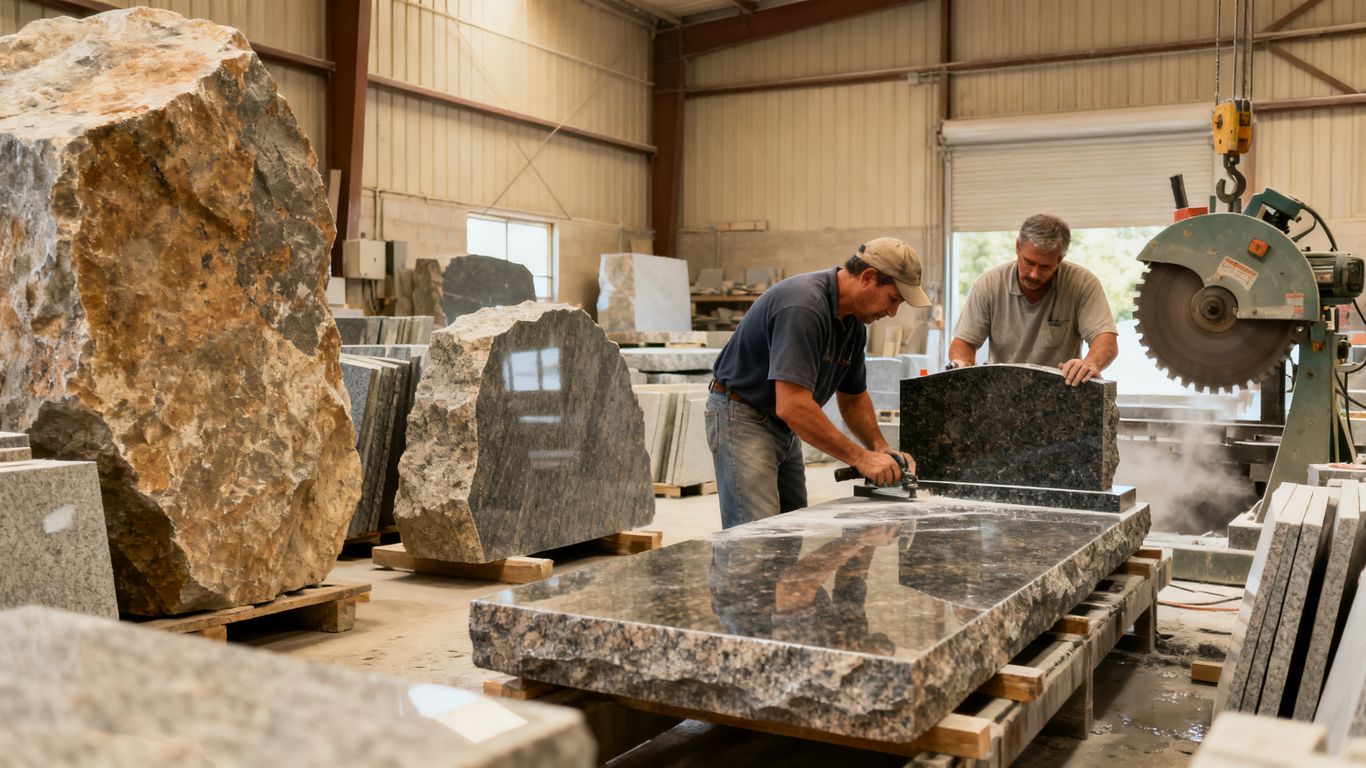
A granite headstone is shaped through a series of decisions rather than one quick manufacturing step. The process begins with the selection of a suitable block and continues through cutting, finishing, lettering, inspection, and installation. Each stage affects how the finished memorial looks and how well it serves the family over time.
The process can feel easier to understand when it is viewed as a progression from raw stone to finished tribute. This granite headstone creation process offers another visual overview of that journey. Families do not need to know every technical detail, but understanding the stages can make design conversations less intimidating.
Selecting and cutting the granite block
Granite blocks are chosen for their color, grain, structural soundness, and suitability for the planned memorial. Natural stone contains variation, so samples may differ slightly from a finished slab or monument. That variation is part of the character of granite, but it should be discussed clearly when a particular color or pattern matters to a family.
Once selected, the block is cut into slabs or pieces at the required dimensions. The intended shape, thickness, base, and any companion pieces are considered at this stage. Accurate cutting helps the finished components align properly during assembly and installation.
Polishing, shaping, and finishing the surface
After cutting, the stone may be shaped into a traditional upright, slant, bevel, flat marker, bench, or another approved form. Edges can be softened, squared, or given a more natural profile. The surface finish is then developed to create the desired level of reflection and texture.
A polished surface is smooth and reflective, while honed granite has a softer, low-sheen appearance. Rock-pitched areas retain a more rugged edge. The finish is not merely cosmetic; it affects contrast, touch, cleaning, and the overall relationship between the stone and its surroundings.
Engraving names, dates, and memorial messages
Lettering is planned around the shape and visual weight of the stone. Names and dates usually receive the clearest placement, while a short epitaph, religious passage, or personal sentence can add warmth without overwhelming the design. Symbols and portraits require their own spacing so the inscription remains easy to read.
Quality checks before delivery and installation
Before delivery, the monument provider should review the spelling, dates, layout, finish, edges, accessories, and overall dimensions. This is the moment to compare the approved design with the completed stone and resolve questions before it reaches the cemetery. Careful review is especially valuable when several family members have contributed information.
Installation also deserves attention. The base must be suitable for the memorial and the cemetery’s requirements, and the stone should be placed securely and level. A beautiful inscription cannot compensate for a poorly prepared foundation, so delivery and setting should be treated as part of the memorial’s quality rather than an afterthought.
Granite colors, finishes, and design options
Granite is not one uniform material. It can be pale gray, deep black, blue-gray, red, brown, or mottled with several tones, depending on its mineral composition and source. Finishes and shapes add another layer of choice, allowing a family to create something traditional, understated, or distinctly personal.
A good design usually begins with the feeling the family wants the memorial to convey. Color can make a stone appear quiet or dramatic; texture can make it formal or natural; and the layout can guide the eye toward a name, portrait, or meaningful symbol.
Common granite colors and their visual differences
Gray granite is often chosen for its calm, familiar appearance and its ability to suit many cemetery landscapes. Black granite creates a deep background with strong contrast and a formal presence. Blue, red, brown, and rose-toned granites can bring more visible movement and warmth through their natural grain.
Color should be viewed outdoors when possible, because shade and sunlight change how the stone reads. A family considering a gray marker can explore gray granite headstone styles, while those drawn to a darker stone may find inspiration in black granite designs. These examples can help clarify preferences without replacing a review of the actual available sample.
Polished, honed, and rock-pitched finishes
Polished granite has a reflective surface that brings out depth and color. Honed granite is smoother than a rough finish but has little shine, giving it a quieter and more contemporary feel. Rock-pitched edges are deliberately textured and can add a natural frame around an otherwise finished face.
The choice often comes down to how the memorial should sit within its surroundings. A polished face may make lettering and portraits stand out, while a honed face can reduce glare. Samples are useful because the difference is easier to understand by touch and in natural light than through a small screen image.
Traditional headstone shapes and custom designs
Upright monuments remain a familiar choice, but families may also select flat markers, bevel markers, slants, companion memorials, benches, or shaped tops. A traditional arch, book form, or gently curved shoulder can suggest continuity, while a simpler rectangular profile may feel more restrained.
Custom work should still respect proportion. The stone needs enough open space for the inscription, and the base must support the selected shape. A design that looks appealing in a sketch may need small adjustments once the grain, thickness, and cemetery viewing distance are considered.
Adding portraits, symbols, vases, and ceramic details
Personal details can make a memorial feel unmistakably connected to the person it honors. Common additions include carved or etched portraits, religious symbols, floral motifs, military emblems, vases, and ceramic photographs. Each element should have a clear place so the finished stone feels composed rather than crowded.
Ceramic details can be especially meaningful when a family wants to include a familiar photograph.
Comparing granite with marble and other materials
Choosing a memorial material is personal, and granite is not automatically the right answer for every family. Marble may appeal to someone who loves its luminous veining and classical history. Bronze can provide a distinctive plaque-style appearance, while another material may carry cultural, religious, or family meaning.
The comparison becomes more useful when it considers the memorial’s entire life: how it will look outdoors, how often it may need care, what the cemetery permits, and how the family feels about its character. No material can replace the meaning of the tribute itself.
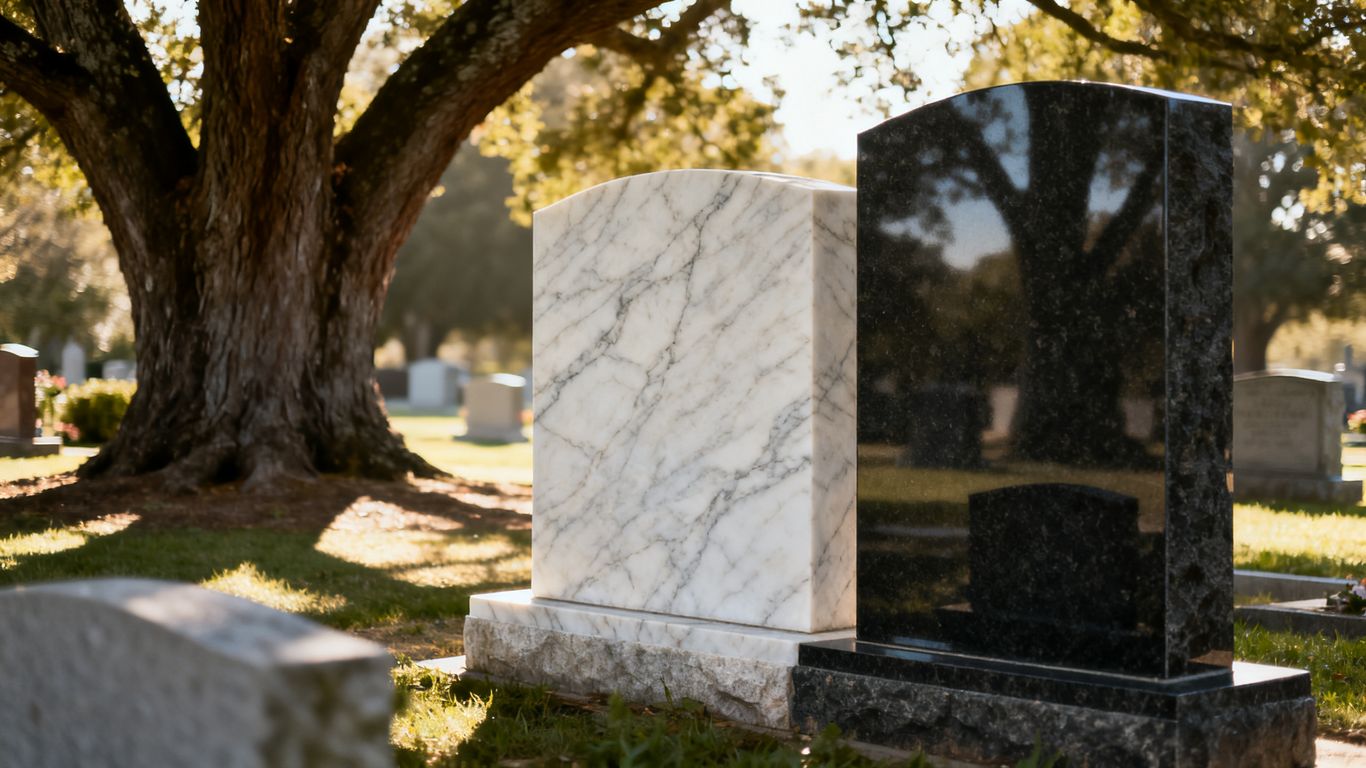
Granite versus marble for durability
Granite is generally valued for its hardness and resistance to outdoor wear. Marble is softer and can develop more visible weathering, surface changes, or loss of detail depending on exposure and local conditions. Marble’s softer appearance can be beautiful, but families should understand that its aging pattern may differ from granite’s.
The choice is therefore both aesthetic and practical. If a family prefers marble, its maintenance needs and expected appearance should be discussed honestly. If a family wants a strong, versatile surface for long-term outdoor use, granite is often a sensible candidate.
Granite versus bronze for appearance and maintenance
Bronze has a warm metallic appearance and may be used as a plaque mounted to a granite base. Over time, exposed bronze can change color through oxidation and weathering. Some families appreciate that developing patina, while others prefer the more stable visual character of a stone face.
Granite does not require the same kind of metal-specific care, although it still benefits from gentle cleaning and inspection. The decision may come down to whether the family prefers a solid stone monument, a metal plaque, or a combination of materials approved by the cemetery.
When a different material may suit a memorial
A different material may make sense when it reflects a loved one’s values, cultural tradition, or personal style. It may also be appropriate when a cemetery has a specific section with established materials or when an existing family monument determines the visual language of a new inscription.
The most meaningful memorial is not necessarily the most elaborate or the most durable material available. It is the one that feels truthful to the person and workable for the people who will care for it.
Balancing personal preference, cemetery rules, and longevity
Families are often balancing three legitimate concerns: what they love visually, what the cemetery allows, and what will remain practical over the years. The best design conversation keeps all three in view from the beginning. A local monument professional can help identify compromises before the family commits to a final drawing.
For a simple comparison, the following factors are useful to discuss together:
| Consideration | Granite | Marble | Bronze |
|---|---|---|---|
| Visual character | Varied colors and finishes | Veined, classical appearance | Warm metallic surface |
| Outdoor behavior | Dense and generally weather-resistant | More prone to visible weathering | May develop patina |
| Design use | Markers, monuments, benches, and details | Carved memorial forms and details | Plaques, lettering, and accents |
| Maintenance focus | Gentle cleaning and inspection | Monitoring surface wear | Metal-appropriate cleaning and care |
This comparison is a starting point rather than a verdict. A cemetery’s written rules and the family’s preferred design should guide the final decision more than a general ranking of materials.
Understanding the cost of a granite headstone
Memorial pricing can feel difficult to interpret while a family is grieving. The quoted amount may include several separate decisions: the stone itself, its dimensions, the design, lettering, accessories, foundation, delivery, and installation. Asking for an itemized explanation makes it easier to compare options without reducing the memorial to a price tag.
A thoughtful budget does not have to mean an impersonal design. Often, a carefully chosen shape, finish, and inscription create a deeply meaningful tribute without adding every available feature. Families deserve time to understand the choices and decide at their own pace.
What affects the price of granite
Granite pricing varies with the color, source, availability, grade, thickness, and amount of material required. Some colors and patterns are more readily available than others, while a large or unusually shaped piece may require additional fabrication. The quality of the finished work and the experience involved in lettering also matter.
Granite pricing varies with color, source, availability, grade, thickness, and the amount of material required. Some colors and patterns are more readily available than others, while a large or unusually shaped piece may require additional fabrication. The quality of the finished work and the lettering method can also affect cost. Ask for a written quote that identifies the memorial, customization, shipping, foundation, installation, cemetery fees, and applicable warranty terms.
How size, thickness, and design influence cost
A larger or thicker stone generally uses more material and may require more handling during fabrication and installation. An elaborate top, shaped edge, multiple panels, or companion design can add labor as well. Simpler forms are not lesser tributes; they can offer a clean setting for a name, dates, and a few carefully chosen words.
Design choices can be prioritized rather than treated as all-or-nothing. A family might choose a preferred granite color first, then decide whether a portrait, border, or special shape fits within the remaining budget.
Engraving, accessories, and installation fees
Lettering is usually priced according to the amount and type of work involved. Additional dates, longer inscriptions, portraits, emblems, vases, ceramic photographs, and carved details can affect the total. Installation may involve a foundation, cemetery coordination, equipment, and setting labor, so it should be listed separately or clearly included.
Ask whether future inscriptions can be added and how that work would be priced. Planning for a companion name or later date at the beginning may influence the stone’s size and layout, even if the immediate memorial is for one person.
Planning a memorial within a family budget
Start by identifying the non-negotiables: cemetery approval, a durable material, accurate lettering, and a design that feels right. Then compare optional details in order of emotional importance. A modest memorial with a well-chosen message can be more affecting than a larger stone filled with elements that do not belong.
A family may also ask about payment timing, delivery, installation, and revision policies before approving the order. Transparent conversations give everyone a clearer sense of control during an otherwise uncertain period.
Choosing the right granite headstone for a loved one
Selecting a headstone is a shared act of remembrance, and families do not always agree immediately. One person may focus on the color, another on the inscription, and someone else on cost or cemetery rules. Those differences can be handled gently by returning to the life and personality the memorial is meant to honor.
It helps to collect a few practical details before requesting a design. Photographs, exact spelling, dates, cemetery measurements, examples of preferred lettering, and a short list of meaningful symbols can give the monument provider a strong starting point.
Matching the stone to the cemetery’s requirements
Ask the cemetery for its current regulations before selecting a shape or size. Requirements may cover dimensions, thickness, finish, foundation, anchoring, color, and whether a particular company must complete the installation. Written rules are more reliable than assumptions based on nearby monuments.
If a family is purchasing from outside the local area, it should also confirm who will coordinate with the cemetery. Clear responsibilities reduce delays and help ensure that the approved design is the design eventually installed.
Selecting a color and finish that fit the memorial
Look at samples in daylight and consider the neighboring landscape, existing family monuments, and the amount of shade around the grave. A dark polished stone may feel formal and prominent, while gray honed granite may blend more softly into a garden-like setting. Neither is more respectful; the right choice is the one that feels connected to the person.
Bring the inscription into the color decision as well. Lettering and images should remain legible against the chosen surface, and a finish that looks beautiful in a showroom should still be comfortable to view outdoors.
Deciding between standard and custom designs
Standard designs can make the process simpler and may offer predictable dimensions and pricing. Custom designs allow more room for a distinctive silhouette, personal imagery, or an inscription shaped around the individual’s story. The choice depends on how much personalization the family wants and how quickly the memorial must be completed.
Custom does not have to mean ornate. A small adjustment to the top, border, lettering, or symbol can make a familiar form feel personal while keeping the overall design calm and balanced.
Working with a local monument provider
A monument provider should explain the available materials, design choices, proofing process, timing, delivery, and installation responsibilities clearly. Interglo Stone offers granite products including headstones, cremation memorials, benches, vases, and statues. Review the specific product details and written terms before ordering.
Local knowledge can also help with cemetery procedures, installation timing, and regional weather considerations. Before approving the order, ask who will answer questions, how revisions are handled, and what support continues after the memorial is delivered.
Caring for and preserving a granite memorial
Granite is durable, but a memorial still benefits from thoughtful care. Dirt, pollen, bird residue, mineral deposits, and biological growth can collect on the surface, especially beneath trees or in damp areas. Gentle, occasional cleaning is usually better than aggressive scrubbing or frequent use of strong chemicals.
Care should always respect the cemetery’s rules and the age of the stone. If the memorial is historic, damaged, or decorated with metal or ceramic elements, a professional opinion may be safer than an improvised cleaning project.
Routine cleaning methods that protect the stone
Begin by removing loose dirt with clean water and a soft brush or cloth. Work from the top downward, rinse thoroughly, and allow the surface to dry so you can see whether additional cleaning is actually needed. A mild, stone-safe cleaner may be appropriate when water alone does not remove the residue.
A simple routine usually includes these steps:
- Check the stone and surrounding area for loose pieces or visible damage.
- Wet the surface thoroughly before gently wiping or brushing it.
- Clean small sections without allowing dirty water to dry on the stone.
- Rinse completely and let the memorial air-dry.
This method avoids unnecessary pressure and makes it easier to notice a developing crack, lifted lettering, or damaged vase. If a cemetery restricts cleaning products or visiting hours, follow those instructions first.
Products and techniques to avoid
Avoid abrasive pads, wire brushes, harsh acids, bleach-heavy mixtures, and household cleaners that leave residue. Pressure washing can force water into joints or damage lettering and adjacent materials, particularly when the operator is too close to the surface. Scraping with metal tools can also leave marks that are difficult to remove.
Do not apply sealers, waxes, or paint without confirming that they are appropriate for the specific granite and finish. A product that creates shine on one surface may discolor another or make future restoration more complicated.
Addressing stains, weathering, and surface damage
Some stains are organic, while others come from rust, irrigation minerals, soil, or nearby metal fixtures. The remedy depends on the source, so repeated experimentation can make matters worse. Light surface weathering may be normal, whereas flaking, cracks, displaced pieces, or sudden discoloration warrant closer attention.
Photograph the issue and record when it appeared. That information can help a monument professional recommend a safe treatment. Never attempt to grind or repaint an inscription simply because it looks faint; the underlying cause needs to be understood first.
When professional restoration or maintenance is needed
Professional help is appropriate when the stone has cracked, shifted, stained deeply, lost lettering, or developed biological growth that gentle cleaning cannot remove. It is also wise when a memorial is old, unusually ornate, or made from multiple materials. Restoration should preserve as much original material and lettering as possible.
A qualified provider can assess the stone, explain what can realistically be repaired, and distinguish reversible cleaning from permanent alteration. Regular visual checks are often enough for routine care, but early attention may prevent a small problem from becoming a costly one.
Conclusion
Granite remains a preferred headstone material because it offers a steady combination of strength, legibility, beauty, and design flexibility. With cemetery requirements confirmed, costs understood, and care handled gently, a granite memorial can provide a dignified place for remembrance for many years.
Frequently Asked Questions
Why is granite commonly used for headstones?
Granite is dense, durable, suitable for outdoor settings, and available in many colors and finishes. It also provides a stable surface for engraved names, dates, symbols, and personal messages.
Does granite last longer than marble outdoors?
Granite generally resists outdoor wear more effectively than marble, although both materials can serve as memorials. Local weather, stone quality, installation, and maintenance all influence how a memorial ages.
What granite color is best for a headstone?
There is no single best color. Gray, black, blue, red, brown, and rose-toned granites each create a different appearance, so families should consider legibility, cemetery surroundings, and personal preference.
Is polished granite better than honed granite?
Neither finish is universally better. Polished granite is reflective and brings out color, while honed granite has a softer, lower-sheen appearance. The choice is mainly a matter of style, visibility, and setting.
How much does a granite headstone cost?
Cost depends on the granite, size, thickness, shape, lettering, images, accessories, foundation, delivery, and installation. An itemized quote is the best way to understand the total for a specific design.
How should a granite headstone be cleaned?
Use clean water and a soft brush or cloth, working gently from top to bottom and rinsing thoroughly. Avoid abrasive tools and harsh chemicals, and seek professional advice for stubborn stains or damaged surfaces.
What should a family check before ordering a headstone?
Confirm the cemetery’s size, material, finish, foundation, and installation rules. Then review the spelling, dates, inscription, design layout, accessories, timeline, and every cost included in the written order.