
A Funeral Home’s Guide to Adding Memorial Products Through a Wholesale Partner

Considering monuments and markers for your funeral home? See the service models, what to settle first, and what to ask a wholesale monument supplier.
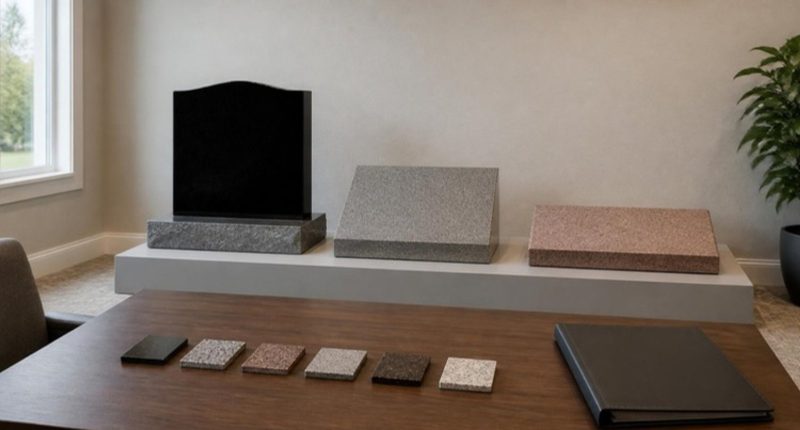
A funeral home can offer monuments, markers, and other memorial products without becoming a monument shop. A firm can refer families to a trusted dealer, take orders from a catalog and coordinate them with a wholesale supplier, or display product and manage the whole process through to the cemetery. Which of these makes sense depends on your staff, your local cemeteries, and how much responsibility you are prepared to take on.
This guide is for funeral home owners, managers, and directors weighing that decision. It covers the roles a funeral home can play, the product choices, the questions to answer before the first order, and what to ask a funeral home monument supplier. It is general business guidance, not legal or regulatory advice, and it does not assume that adding memorial products is right for every firm.
Why Some Funeral Homes Add Memorial Products
One reason is continuity of service. A family that has worked with your staff through a service may have to start over with a different business to arrange a permanent memorial. Some families would prefer to continue with people they already know, and some funeral homes would prefer to see that last step handled to the same standard as the service.
Cremation is part of the picture as well. According to the National Funeral Directors Association, its 2025 Cremation & Burial Report projected a 2025 cremation rate of 63.4%, and NFDA expects cremation to reach 82.3% by 2045 (NFDA statistics). Families who choose cremation may still want a permanent place of remembrance, which can take the form of a cremation memorial, a columbarium niche, a bench, or a marker.
There are also reasons to hold back. Memorial work runs on a different timeline from funeral service, carries its own error risks, and in some communities is already done well by an established monument dealer. Those points are covered near the end of this guide.
Decide What Role the Funeral Home Will Play
Before looking at products or suppliers, decide how far your involvement will go. The four models below are starting points, and a firm can begin with one and move to another.
Referral
You recommend one or more monument dealers and stay out of the transaction. This takes the least effort and carries the least risk. It suits a firm with a good local dealer relationship and no staff time to spare.
Catalog and Order Coordination
You present options from a supplier’s catalog and samples, collect the family’s choices, and place the order with a wholesale supplier. You hold no inventory. Your staff owns the order details, the proof approval, and communication with the family.
Display and Selected Inventory
You keep a small display, such as granite color samples or a few finished pieces, so families can see materials in person. This needs floor space, an upfront purchase, and a plan for moving and insuring heavy stock.
Full Coordination Through to the Cemetery
You manage design, cemetery approval, delivery, and setting, which may mean working with a setter or contractor. This is the closest to operating as a monument dealer and brings the most responsibility. It may suit firms that also own or operate a cemetery.
No model is the correct one. The point is to choose deliberately, because the role you take determines what you need from a supplier and what you must be ready to answer for.
Choose a Product Scope You Can Support
A narrow, well-understood range is easier to offer accurately than a full catalog. Categories a funeral home might consider include:
- Upright monuments, in single and companion sizes.
- Flat, bevel, and slant markers, which a cemetery may require in particular sections.
- Cremation memorials, including markers and monuments designed to hold or accompany an urn.
- Memorial benches.
- Columbarium niche fronts or complete columbarium units, mainly for firms that operate a cemetery or cremation garden.
Start with what the cemeteries your families use will accept, since that sets the real limits. If your firm is considering a columbarium of its own, our guide to columbarium planning and niche specifications covers that project separately.
Confirm Cemetery Requirements Before You Quote
Cemetery rules decide what can be placed on a lot, and they vary by cemetery and can vary by section. Rules can cover the type of memorial, its size, material, color, finish, the base or foundation, and who is permitted to set it. Ask whether the cemetery charges setting or inspection fees and whether it requires its own staff or approved contractors to do the work.
Get the requirements for the specific lot from the cemetery, in writing where possible, before you give a family a price or send a supplier a request. A memorial that does not meet the cemetery’s rules may be refused, and correcting it can be costly.
Settle Who Is Responsible for What
An unassigned step is an easy way for a memorial order to go wrong. For the model you have chosen, write down who handles each of the following: the funeral home, the supplier, the cemetery, a contractor, or the family.
- Design and layout, and who prepares the proof.
- Checking names, dates, and spelling, and obtaining the family’s signed approval of the final proof.
- Cemetery approval of the design and dimensions.
- Receiving the delivery, inspecting it, and reporting damage.
- Storage between delivery and setting.
- The foundation, and setting the memorial on the lot.
- Permits or cemetery paperwork, and any fees.
- Later work, such as adding a second inscription or a final date.
- Keeping the family informed at each stage.
A supplier can tell you which of these it handles and which it does not. Do not assume delivery includes setting, or that a quoted price includes cemetery fees.
Regulatory and Disclosure Points to Check
The Federal Trade Commission’s Funeral Rule applies to funeral providers, which the FTC describes as businesses that sell or offer to sell both funeral goods and funeral services to the public (FTC guidance on the Funeral Rule). This guide does not address whether or how the Rule applies to memorial products. Before you add them, ask your attorney or state funeral directors association how those sales should be handled alongside your existing price disclosures.
State and local rules differ as well. Depending on where you operate, there may be requirements that affect who may sell memorials, how preneed memorial sales are handled, how sales tax applies, and what a cemetery may require of an outside seller. Confirm what applies to your firm before taking orders.
What to Ask a Wholesale Supplier
Suppliers differ in who they sell to, what they make or source, and how much of the process they support. These questions help you compare them on the points that matter to a funeral home:
- Do you sell to funeral homes, and what do you need from us to open an account?
- Is there a minimum order, by piece or by value?
- Which product types, granite colors, and finishes do you supply, and are catalogs or color samples available?
- Who prepares the design proof, and how are changes and approvals handled?
- Which lettering and artwork methods do you offer, and on which granites?
- How is pricing built, and what is not included in a quote?
- How do you communicate production timing, and what affects it?
- How is the memorial packed and shipped, who arranges freight, and what equipment do we need to receive it?
- What is the process if a piece arrives damaged or does not match the approved proof?
- Can you match an existing family monument, or add an inscription to a stone already in place?
Ask every supplier the same questions and keep the answers in writing. For a fuller comparison framework, see our checklist for evaluating a wholesale granite monument supplier. If lettering methods are new to your staff, our explanation of sandblasting and laser etching gives the background.
What a Supplier Will Need From You
A quote is only as accurate as the request behind it. Expect to provide the memorial type, dimensions, granite color, finish, the exact inscription and any artwork, the cemetery’s requirements, the delivery location, and the timing the family has in mind. Incomplete requests lead to follow-up questions and revised prices. Our guide to what to include in a wholesale quote request lists the details by category.
Build a Repeatable Internal Process
Memorial orders are detail-heavy and permanent. A short written process protects families and your staff.
- Decide when the subject is raised. Families do not always choose a memorial at the time of the service. Some firms treat it as part of later follow-up, at a time the family chooses, and never as a condition of any other service.
- Use one order form that captures the lot location, cemetery requirements, product, inscription, and approvals.
- Require the family’s signed approval of the final proof before anything is cut.
- Assign one person to own each order from request to setting.
- Keep the proof, approvals, cemetery correspondence, and delivery records with the family’s file.
- Agree with your accountant how memorial sales will be priced, invoiced, and recorded. This guide makes no assumptions about pricing or margins.
When Adding Memorial Products May Not Be a Good Fit
Declining to offer memorial products is a reasonable decision. It may be the better one when:
- No one on staff has time to own orders through to completion.
- A local monument dealer already serves your families well and a referral works.
- The cemeteries you work with restrict who may sell or set memorials.
- You cannot arrange dependable receiving, storage, or setting.
- The number of families likely to use the service is too small to keep staff practiced.
A referral arrangement can be revisited later. An order taken without the means to complete it well is much harder to put right.
Checklist: Before You Offer Memorial Products
- ☐ We know how often families ask us about memorials, and what they ask for
- ☐ We have chosen our role: referral, order coordination, display, or full coordination
- ☐ We have defined the product types we will offer at the start
- ☐ We have current written requirements from the cemeteries our families use most
- ☐ We have decided how products will be shown: catalog, samples, display pieces, or a mix
- ☐ One staff member is responsible for memorial orders, with a backup
- ☐ We have compared suppliers using the same written questions
- ☐ We know what information a supplier needs to quote, and our order form collects it
- ☐ Families sign the final proof before production
- ☐ Receiving, storage, and setting responsibilities are assigned in writing
- ☐ We know which cemetery fees and permits apply and who pays them
- ☐ Our attorney or state association has reviewed how memorial sales fit our disclosures and licensing
- ☐ Pricing, invoicing, and sales tax treatment are agreed with our accountant
- ☐ Order records are kept with the family’s file
- ☐ Staff know when and how the subject is raised with families
Where Interglo Stone Fits
Interglo Stone is a granite memorial company in Elberton, Georgia, in business since 1998. We supply qualified trade buyers, including funeral homes. To request wholesale pricing, contact our team with your business details and product requirements. Pricing depends on the product and its specifications, and minimum order requirements and shipping options vary, so we confirm both when you inquire. You can read more about wholesale granite and memorial products for trade buyers on our site.
Frequently Asked Questions
Can a funeral home sell headstones and other memorial products?
Some funeral homes offer them, but no single answer applies everywhere. Whether and how your firm can do so depends on your state and local licensing and business rules, how the sales fit your existing disclosure obligations, the rules of the cemeteries involved, and the terms of the supplier you work with. Confirm each of these with your attorney or state funeral directors association before taking orders.
Does a funeral home need to keep monuments in stock?
Not necessarily. One option is to work from a supplier’s catalog and samples and order each memorial as needed. Display pieces are optional and bring storage, handling, and insurance considerations.
What information does a wholesale monument supplier need for a quote?
A supplier is likely to ask for the memorial type, dimensions, granite color, finish, inscription and artwork, cemetery requirements, delivery location, and requested timing. Suppliers differ, so ask each one what it requires.
Who installs the monument at the cemetery?
It depends on the cemetery and the arrangement. A cemetery may set memorials itself, require approved contractors, or allow the seller or an independent setter to do the work. Confirm this with the cemetery before quoting.
What should a funeral home ask a wholesale monument supplier?
Ask about account requirements, minimum orders, product range, proofs and approvals, pricing and what it excludes, production timing, packing and freight, and how damage or errors are handled.
Start With the Decisions, Then Choose the Supplier
Settle three things before you approach a supplier: the role your firm will play, the products you will offer, and who is responsible for each step. With those decided, the supplier conversation becomes specific. If you would like to discuss wholesale pricing or product options for your funeral home, contact Interglo Stone, call (706) 208-1045, or email Sales@IntergloStone.com.