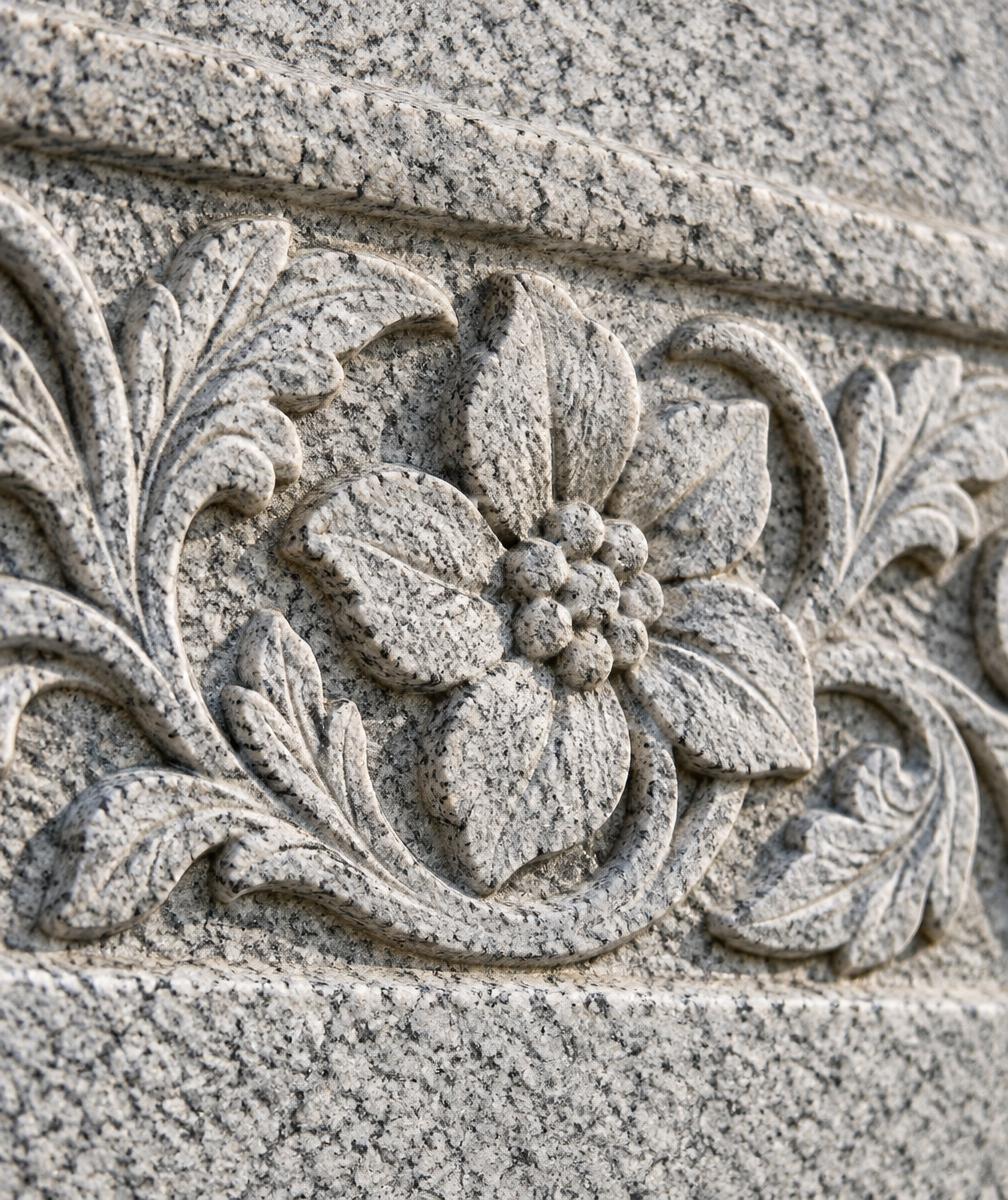
Sandblasting
Lettering, borders, symbols, and carved designs cut into the surface of the granite.


Elberton, Georgia
Design, craftsmanship, and memorial production since 1998
A memorial identifies a resting place, preserves important names and dates, and provides something tangible for the generations who come later. It is one of the few objects a family chooses that is meant to remain in place indefinitely.
Choosing a memorial for a Dallas cemetery also requires understanding the exact requirements of that cemetery. The permitted memorial type, the dimensions, and the accessories allowed on one plot may not match the plot beside it, so those details belong at the beginning of the process rather than the end.
Interglo Stone creates custom granite memorials from its facility in Elberton, Georgia, and has combined design consultation, stone craftsmanship, lettering, carving, etching, portrait options, and memorial-product development since 1998. Families researching granite headstones for Dallas work with that Georgia workshop directly.
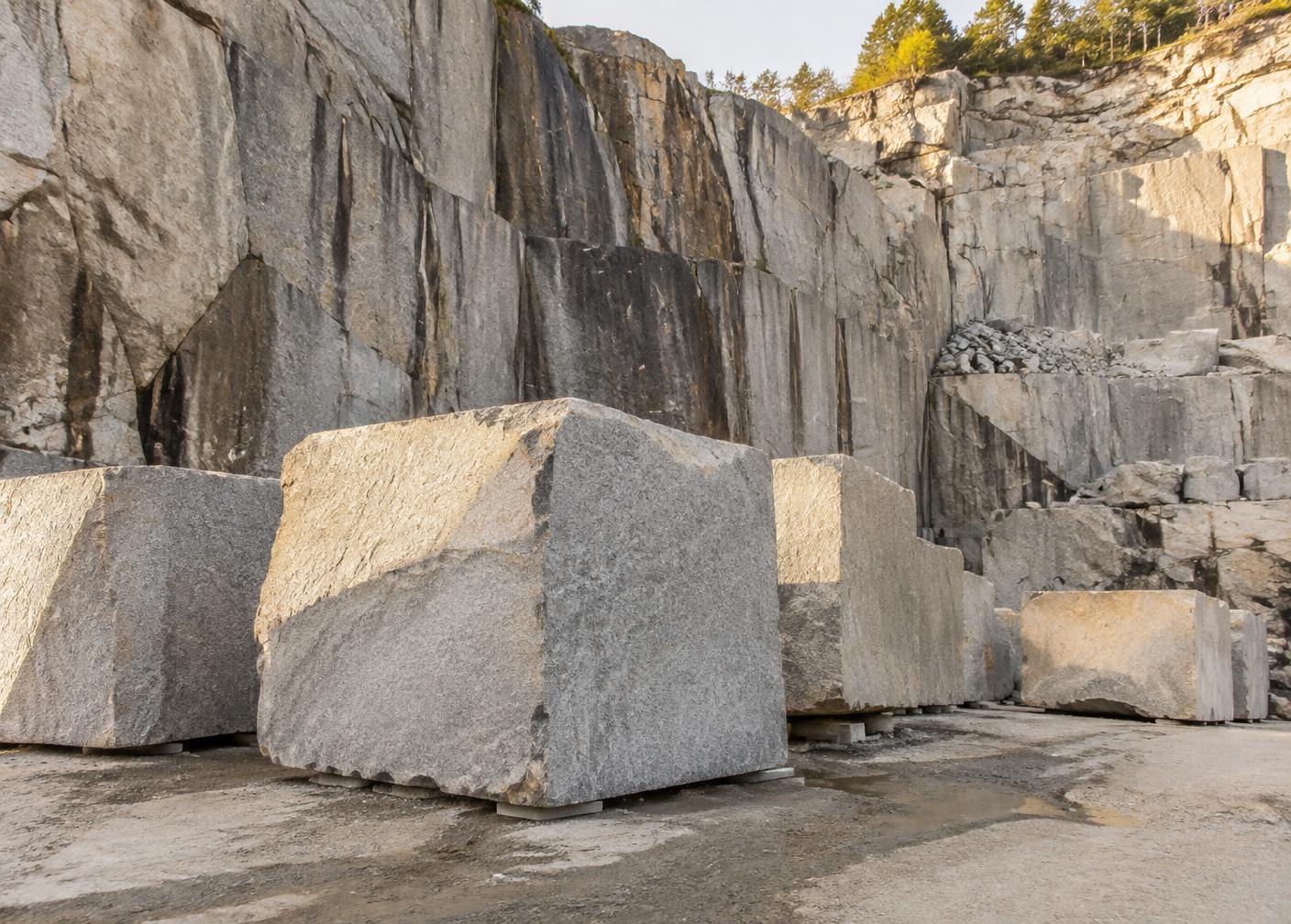
Elberton’s granite industry is an important part of the Interglo Stone story. The workshop sits inside a community whose economy, skills, and equipment have been shaped by working stone.
The City of Elberton and Elbert County identify the community with the “Granite Capital of the World” designation, and that concentration of stone knowledge is the environment in which these memorials are designed, cut, carved, and finished.
Granite selection for a memorial is discussed as part of the design, along with dimensions and finish, rather than assumed in advance.
The story comes first.
The stone follows.
A simple individual memorial may need only a name, dates, an epitaph, and a symbol that meant something to the person being remembered.
A companion memorial may need balanced space for two inscriptions, along with room for dates that will be added in the future.
A family memorial may need space for multiple generations, so the layout has to anticipate names that are not yet known.
A cremation memorial may integrate secure niches with visible inscription panels, combining the memorial and the placement in a single granite design.
A single name, dates, an epitaph, and a symbol that carries personal meaning.
Balanced space for two inscriptions, with room reserved for future dates and lettering.
A layout planned to hold multiple generations and the names added over time.
Secure niches integrated with visible inscription panels in one permanent memorial.
Interglo Stone was founded in 1998 and works from its facility in Elberton, Georgia, combining design consultation with stone craftsmanship, lettering, carving, etching, and memorial product development.
Names, dates, spelling, inscriptions, scripture, artwork, portraits, and dimensions should all be checked and approved before permanent work is completed on the granite.
Upright monuments, markers, companion designs, sculptural work, cremation memorials, benches, and granite components are available as starting points for a custom design.
Lettering, borders, symbols, and carved designs cut into the surface of the granite.
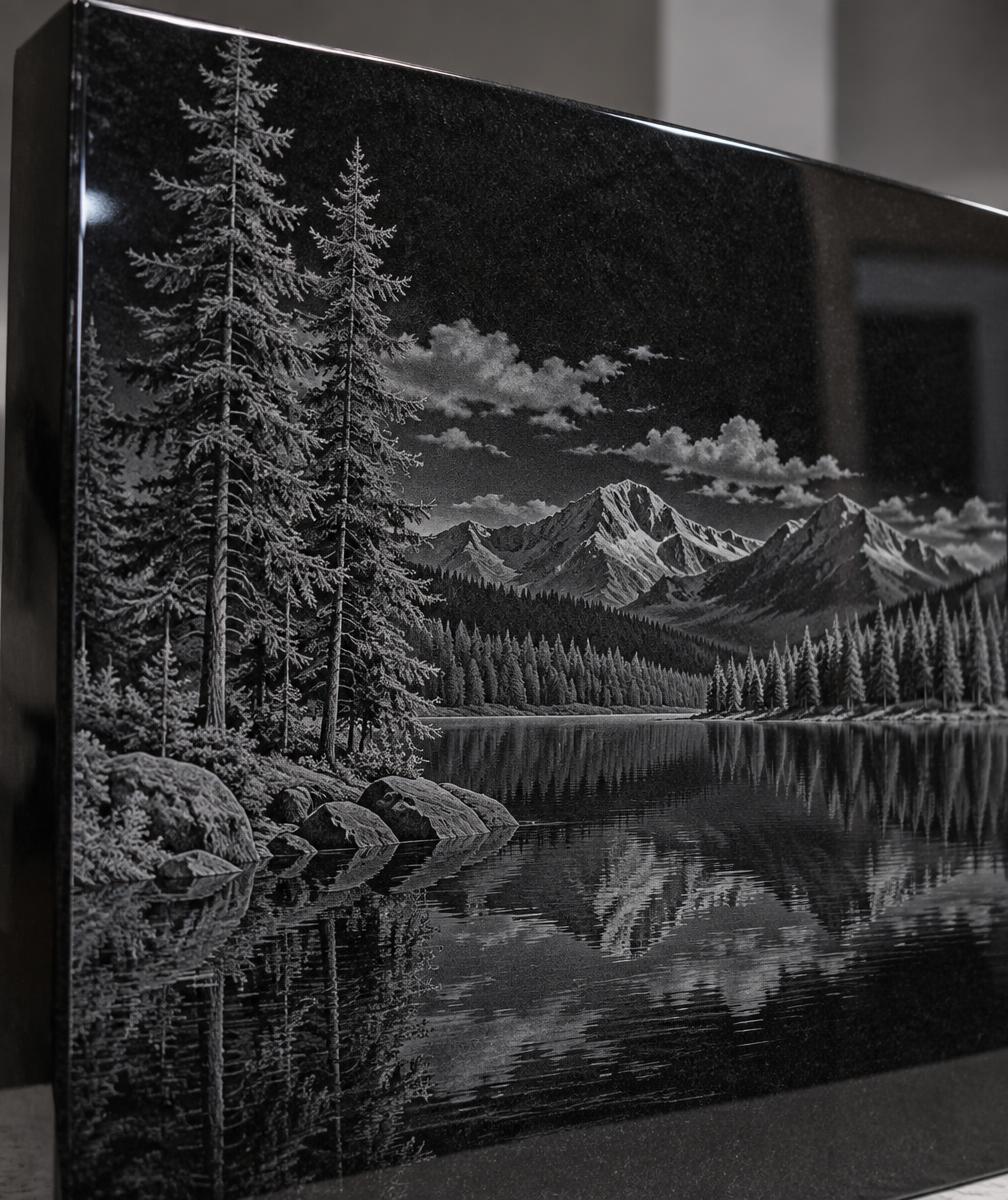
Portraits, landscapes, detailed scenes, and other imagery where appropriate.

Photographic likenesses produced in memorial-oriented formats and placements.
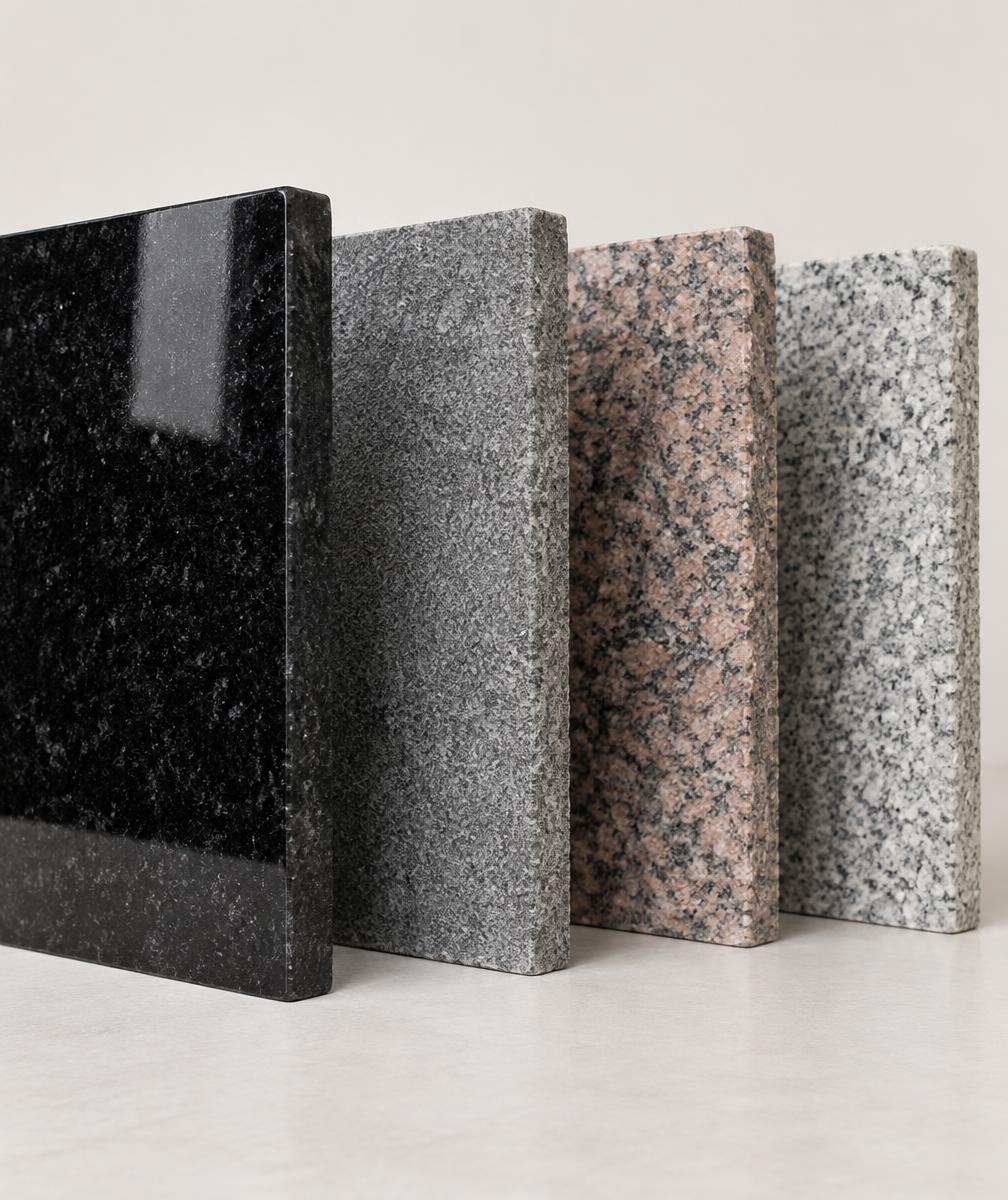
Dark polished granite can create strong contrast for certain etched imagery, while lighter granite and contrasting finishes may suit sandblasted lettering and carved details.
Monuments, grave markers, and memorial products that can be designed and personalized for a Dallas cemetery project.
A vertical granite die with a supporting base, suitable for individual, companion, religious, artistic, or family-oriented designs.
Low-profile markers that may be suitable where a cemetery section restricts height or favors a consistent lawn appearance.
A low marker with a sloped face, another option where height is limited and a uniform appearance is preferred.
Designed so both the current inscription and future lettering are planned as part of the same layout.
Sculptural features such as angels, religious figures, columns, flowers, and crosses shaped into the memorial.
Memorials that integrate cremation niches with inscription panels, artwork, and personalization.
Larger designs that carry a family name and reserve space for names and dates across generations.
Granite seating that serves as a memorial and as a place to sit within the cemetery setting.
Granite vases specified with the memorial, where cemetery accessory rules allow them.
Sculptural granite figures selected as part of a memorial design or as a companion element.
Bases, sub-bases, caps, niche doors, and related granite pieces that complete a memorial assembly.
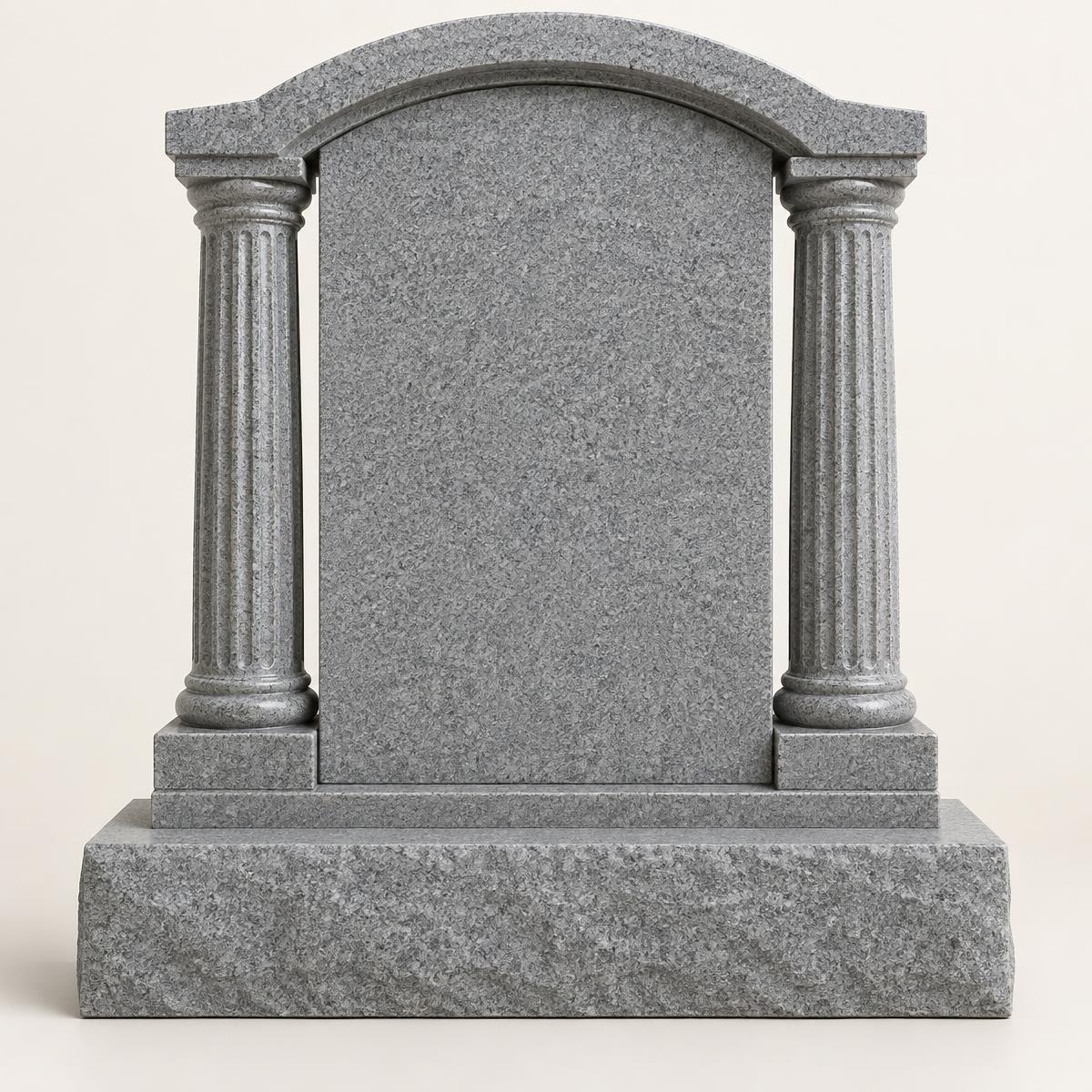
An upright design with fluted columns, an arched cap, a sub-base, and a larger granite base.
Cemetery dimensional approval should be confirmed before finalizing a design.
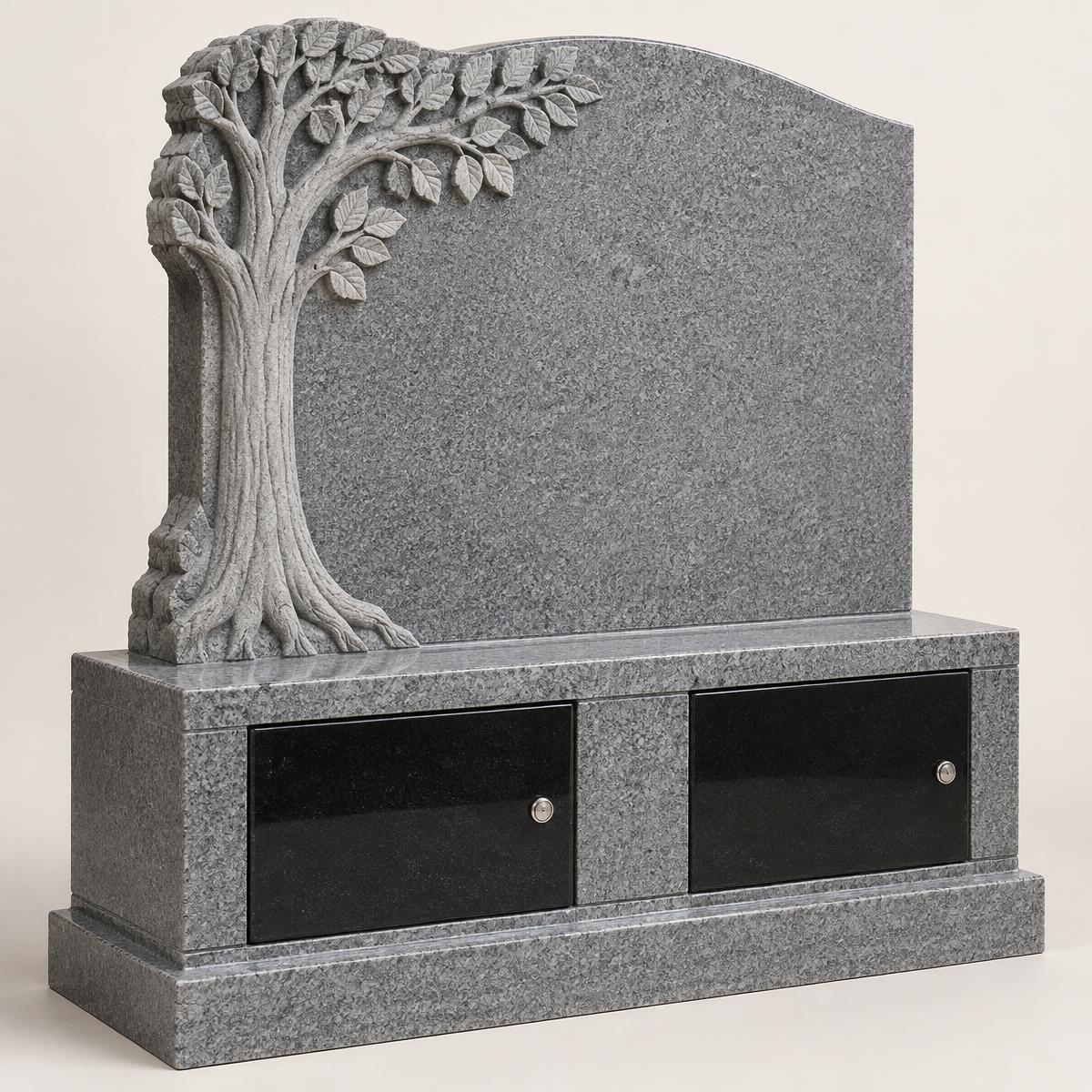
A carved tree motif paired with an integrated cremation base and polished granite niche doors.
Cemetery dimensional approval should be confirmed before finalizing a design.
Cremation does not have to be handled only through a separate urn kept away from the cemetery. It can be incorporated into a permanent granite memorial that carries the inscription and the remains together.
Cremation headstones, cremation benches, columbaria, integrated niches, and removable granite niche doors make that possible, and the visible surfaces can still hold names, dates, scripture, etched artwork, and porcelain portraits.
Texas law gives cemetery organizations authority to regulate the placement and uniformity of memorials, as well as the class and kind of markers, monuments, effigies, and other structures permitted in the cemetery.
Do not assume that a monument seen in another cemetery—or another section of the same cemetery—is automatically permitted on your plot.
Request the written requirements for the exact plot, then design within them. It is far easier than revising an approved design after fabrication has begun.
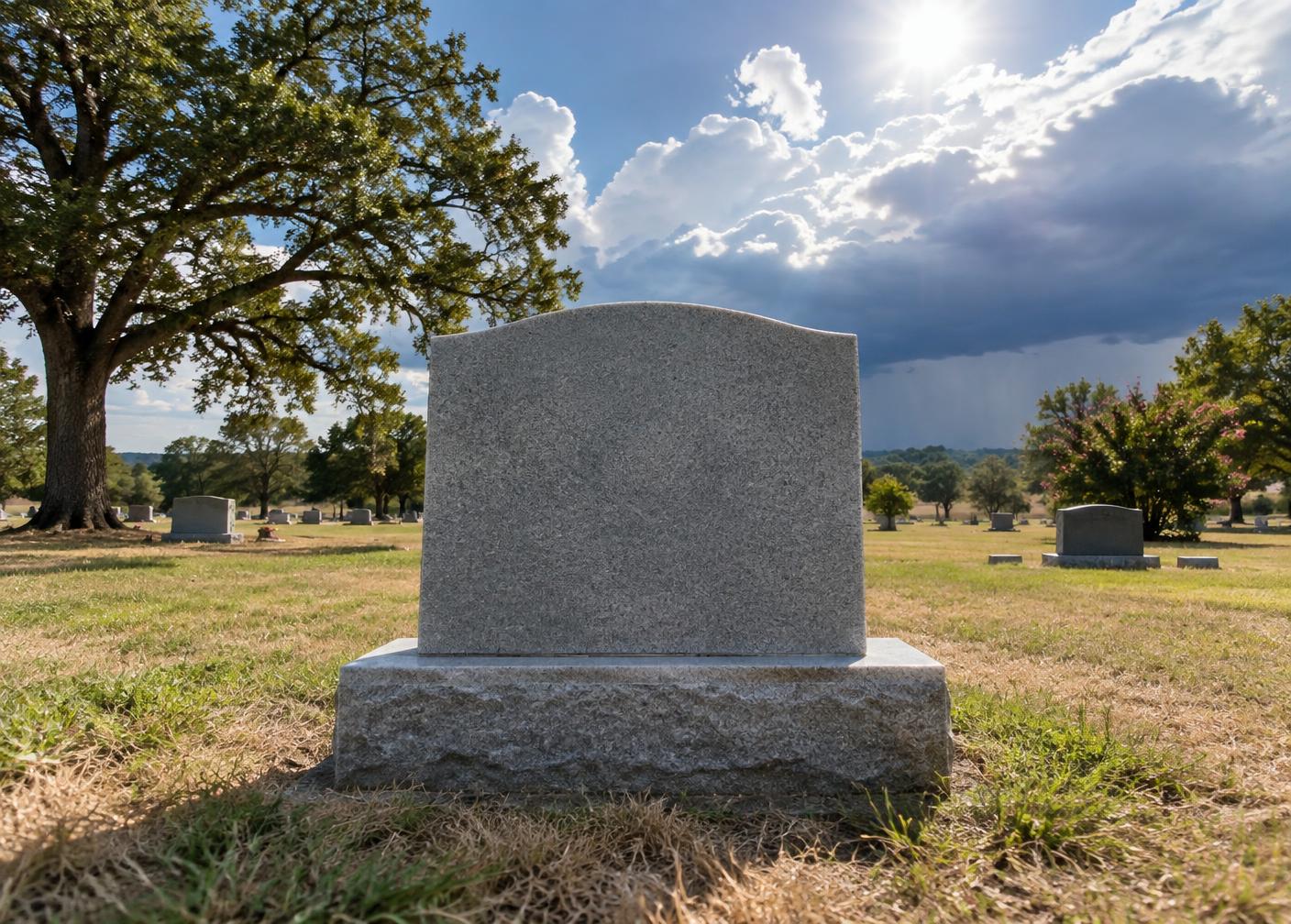
Dallas experiences hot summers, periods of intense sun, thunderstorms, and seasonal temperature changes, and a memorial stands in all of it without shelter.
Granite is widely used for outdoor cemetery memorials because of its strength and durability. Long-term performance still depends on dimensions, the base, the foundation, the setting, drainage, installation, and the requirements of the cemetery.
Detailed carvings, polished surfaces, etched artwork, and portraits are best considered as part of that complete memorial environment rather than in isolation.
Identify the exact cemetery, section, and plot, and obtain the written specifications that apply to it.
Individual, companion, family, grave marker, cremation memorial, bench, statue, or another memorial form.
Granite color, dimensions, thickness, base, and finish, within what the cemetery permits.
Names, dates, epitaphs, scripture, symbols, portraits, and imagery arranged into a layout.
Spelling, dates, punctuation, layout, artwork, portrait placement, dimensions, and space for future additions.
Cutting, shaping, finishing, carving, engraving, assembly, quality review, and fulfillment as applicable.
Crating, banding, and staging, reviewed against the destination, site access, and unloading equipment.
Granite memorials can be extremely heavy. Crating, banding, and staging are planned around product size, weight, quantity, destination, site access, and the unloading equipment available when the shipment arrives.
Receiving ZIP code, receiving location, and unloading or access information.
Yes. Depending on the memorial, available surface area, granite, and production method, personalization may include epitaphs, scripture, floral designs, religious symbols, military emblems, portraits, etched artwork, carved details, family names, and other meaningful imagery. The design proof should show how those elements work together before permanent production begins.
The cemetery should provide the permitted dimensions for your exact plot or section. Ask specifically about the monument die, base, foundation, overall height, and any setback or placement rules. Do not size a custom stone solely from photographs of nearby monuments because different sections or older installations may follow different requirements.
Sandblasting removes granite from the surface and is commonly used for lettering, borders, symbols, and carved designs. Etching is often used for finer visual detail such as portraits, landscapes, or detailed scenes. Interglo Stone states that it manages laser etching, hand etching, and full-color etching projects. The best technique depends on the desired image, granite color, available space, and overall memorial design.
Yes. Interglo Stone offers porcelain portrait options in multiple shapes, sizes, and colors. A good-quality source photograph and an appropriate placement area on the monument are important. Portrait size and location should be included in the proof so the family can evaluate the balance between the image, lettering, and other artwork.
Yes. In fact, early planning can be beneficial. The initial design can reserve appropriate space for a future name, date, epitaph, portrait, or other detail. This can help the finished companion memorial remain visually balanced when the second inscription is added later.
Confirm the final receiving destination, freight access, unloading capability, storage plan if the monument will not be set immediately, and who will handle cemetery installation. The weight and number of granite components matter. Sharing those details before shipment helps avoid a situation in which a heavy crated monument arrives at a location that is not prepared to receive it.
Timing can vary with granite availability, dimensions, design complexity, proof approval, carving, etching, portrait work, number of components, production scheduling, packaging, and transportation. Confirm the current project-specific estimate when the specifications are known rather than relying on a generic turnaround promise.
Custom granite memorial design and manufacturing, located in Elberton, Georgia.
The Interglo Stone About Us page states that its lifetime guarantee protects against defects and weathering.
Confirm the complete written warranty terms, eligibility, and exclusions before publishing expanded warranty language.
Warehouse: (706) 283-0824
Office: (706) 208-1045
Email: Sales@IntergloStone.com
Address: 1511 Martin Villa Dr, Elberton, GA 30635
Hours: 8:00 AM – 5:00 PM Pacific Time