

Do Granite Headstones Fade, Crack, or Chip Over Time?

Key Takeaways Granite is naturally durable, but its surface, lettering, foundation, and surrounding conditions all influence how a memorial changes over time. Granite can weather gradually without losing its structural…
Key Takeaways
Granite is naturally durable, but its surface, lettering, foundation, and surrounding conditions all influence how a memorial changes over time.
- Granite can weather gradually without losing its structural strength.
- Sun, moisture, frost, pollution, and biological growth can alter its appearance.
- Paint and decorative finishes usually fade before the granite itself.
- Cracks, chips, tilting, and unstable bases deserve prompt attention.
- Gentle care and skilled installation help preserve a memorial for generations.
How granite headstones change over time
Families often wonder, “do granite headstones fade?” The answer depends on what is fading: the stone, its polish, or the lettering applied to its surface. Granite is a strong natural material, but no outdoor memorial remains completely untouched by weather, sunlight, and time. With thoughtful material selection and care, changes are usually gradual.
Do granite headstones fade naturally?
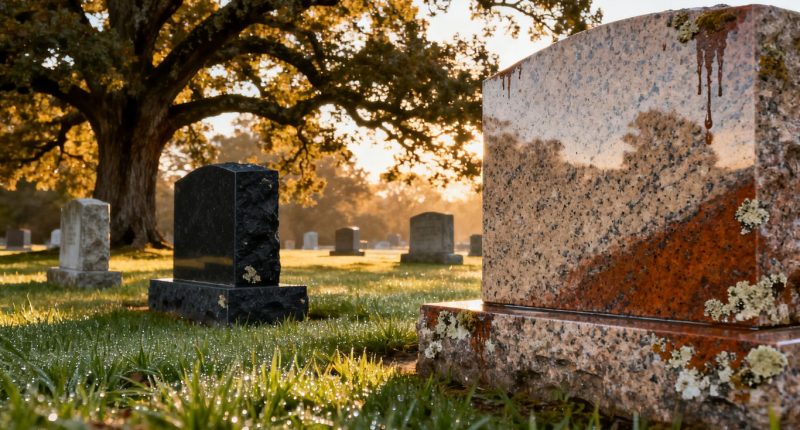
Granite does not typically fade in the same way painted wood or fabric does. Its minerals may appear less vivid as a polished surface becomes weathered, and some colors show environmental changes more readily than others. Dark granite can develop a softer, less reflective appearance, while lighter stone may show deposits or staining more clearly. The lettering or paint may change long before the stone itself does.
What normal weathering looks like
Normal weathering may include a slight loss of polish, subtle surface dullness, or small changes in contrast around engraved areas. A little discoloration does not automatically indicate a serious defect. Look for changes that develop evenly rather than a sudden mark, crack, or broken edge. Gentle cleaning can sometimes reveal that what seemed like fading was actually dirt, mineral residue, or lichen.
How long granite commonly lasts
A well-selected and properly installed granite memorial can remain in place for many generations. Its service life depends on the stone’s quality, the climate, the foundation, installation methods, and how the surface is maintained. Older memorials may show age while still being structurally sound. A local specialist can assess those differences before recommending repair or replacement.
Granite grade can matter when choosing a lasting memorial. The useful question is not simply how old the stone is, but whether its current condition affects safety, legibility, or the dignity of the tribute.
Why stone color and finish affect appearance
Granite comes in many colors and patterns, and each responds visually to weather in its own way. A highly polished black surface may reveal fingerprints, water deposits, and loss of sheen, while a lighter stone may make stains less obvious but show biological growth more readily. Honed and sandblasted finishes are less reflective from the beginning, so a change in gloss is not always a sign of deterioration.
What causes granite headstones to fade
Several different processes can make a granite headstone look faded. Some affect the stone’s surface, while others affect paint, gilding, sealants, or decorative details. Understanding the difference helps a family choose an appropriate response rather than treating every color change as a reason to replace the memorial.
Sunlight, rain, frost, and temperature changes
Direct sunlight can gradually alter painted lettering and some decorative finishes. Rain repeatedly wets the stone, and evaporation can leave minerals behind. In colder areas, water entering tiny openings can freeze and expand, placing stress on vulnerable edges. Seasonal temperature swings also cause materials to expand and contract at slightly different rates, especially where finishes or repairs meet the stone.
Hard-water deposits, pollution, and biological growth
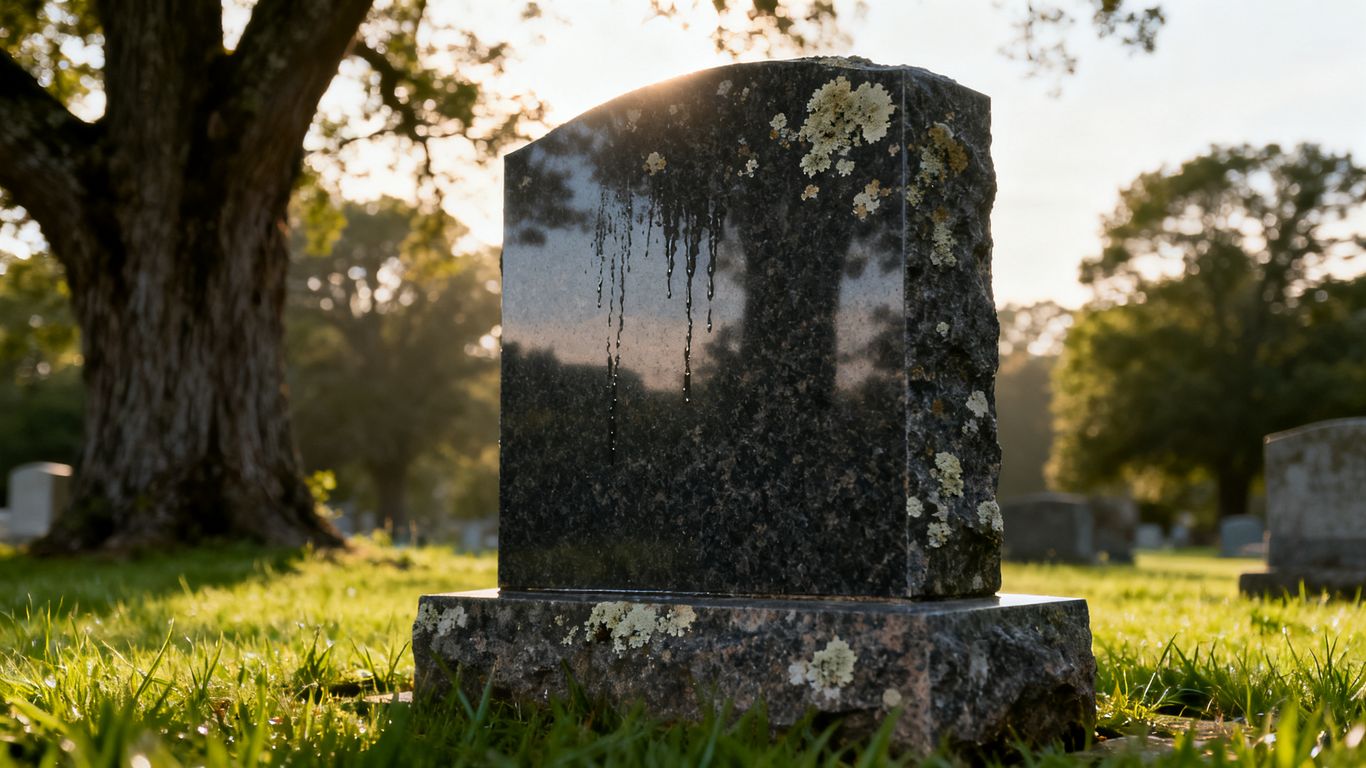
Sprinklers and hard water may leave pale mineral deposits on a dark polished surface. Airborne pollution can settle as a dull film, while leaves, soil, moss, and lichen hold moisture against the stone. These substances may obscure the original color without changing the granite underneath. Cleaning should be approached carefully because rubbing aggressively can create a different kind of surface damage.
Fading of paint, lettering, and decorative finishes
Painted lettering is exposed to the same sun and precipitation as the stone, so it commonly needs attention sooner than the granite. Gold, silver, and other decorative treatments can also wear unevenly depending on exposure and application quality. A faded inscription is often a restoration issue rather than evidence that the whole memorial has failed. A specialist can examine whether cleaning, repainting, or refinishing is the most suitable step.
The expected life of memorial paint varies with the stone, location, exposure, and workmanship. Painted inscriptions can change outdoors over time, and a specialist can explain what restoration may involve.
Differences between polished, honed, and sandblasted surfaces
A polished surface reflects light and gives colors a deeper, sharper appearance, but surface deposits and scratches can be conspicuous. Honed granite has a muted, smooth appearance and may hide minor changes in sheen. Sandblasted areas are textured and commonly used for lettering or design work, so they should not be scrubbed as though they were polished. The finish should guide both cleaning choices and expectations about normal aging.
When granite headstones crack or chip
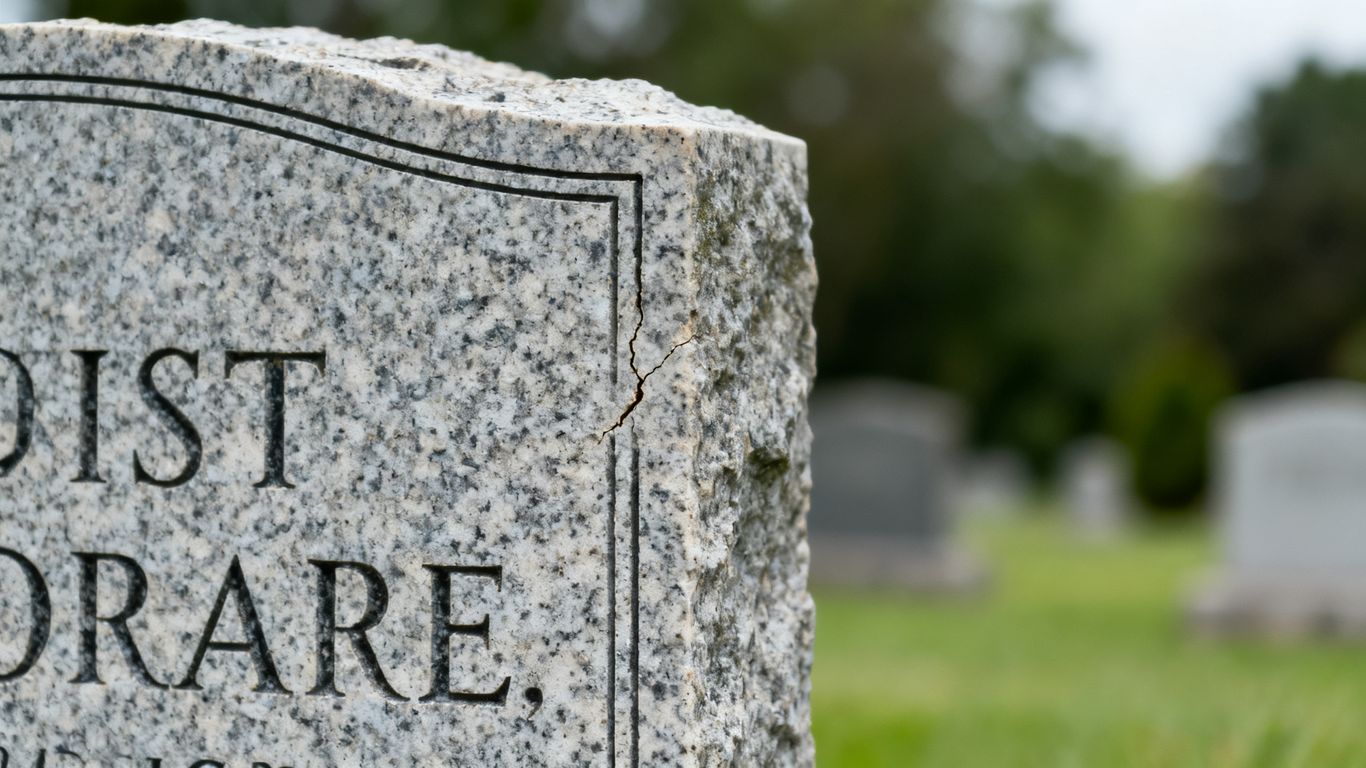
Cracks and chips are different from ordinary fading. A small nick may be cosmetic, while a crack that crosses a support point or connects with an edge can require urgent evaluation. The location, depth, direction, and movement of the stone all matter. If a memorial has become unstable, avoid attempting to lift or straighten it without professional help.
Common causes of cracks in memorial stone
Cracks can result from an impact, an existing weakness in the stone, stress around a drilled feature, or movement in the foundation. A crack may also become more noticeable after years of moisture and seasonal changes. Not every visible line is a structural fracture; natural mineral veining can resemble one. An experienced monument professional can distinguish the two by examining the pattern and depth.
How impact and improper installation cause chips
Lawn equipment, falling branches, maintenance tools, and accidental contact can chip corners or exposed edges. Poor handling during transport or setting may create stress that becomes visible later. Installation also matters: an uneven base can place concentrated pressure on one part of the tablet. Even a durable stone can be damaged when it is moved, supported, or secured improperly.
Freeze-thaw cycles and ground movement
When water enters a small opening and freezes, expansion can widen a weakness. Repeated freeze-thaw cycles are especially concerning where a crack reaches an edge or where water can collect. Ground movement, settling soil, tree roots, and drainage problems may shift the base or create uneven support. These conditions can explain why a previously sound memorial begins to lean or develop new fractures.
Distinguishing surface damage from structural damage
Surface scratches, shallow chips, and worn lettering may not threaten the memorial’s stability. A crack that runs through the stone, separates a corner, or coincides with movement is more serious. Watch for widening lines, loose pieces, rocking, or a change in alignment after heavy weather. When in doubt, document the condition with photographs and request an assessment before cleaning or repairing it.
Comparing granite and slate headstones on durability, maintenance, appearance, and cost can help families frame a replacement decision, but an existing granite memorial should still be evaluated on its individual condition.
Signs a granite headstone needs attention
A memorial does not need to look brand new to remain meaningful and serviceable. Still, visible changes can signal that cleaning, lettering work, foundation correction, or structural repair is appropriate. A calm inspection is easier when you separate appearance from safety. Pay particular attention to changes that are new, worsening, or connected to movement.
Faded lettering and difficult-to-read inscriptions
If names, dates, or verses are becoming difficult to read, the issue may involve worn paint, accumulated deposits, reduced contrast, or damage to the engraved surface. Photograph the inscription in even light and compare it with older family photographs if available. Do not assume that repainting is the only solution; cleaning may restore contrast, while refinishing may be needed in other cases.
Hairline cracks, broken edges, and missing corners
Hairline cracks should be watched rather than ignored, particularly when they are near a corner, mounting point, or base. Broken edges and missing corners can allow water to enter vulnerable areas and may worsen with handling or frost. Keep loose fragments safely aside if they can be collected without disturbing the memorial. A specialist can advise whether a repair will be durable and visually appropriate.
Tilting, settling, and unstable bases
A headstone that tilts, rocks, or no longer sits evenly may have a foundation or ground problem. Settling can occur as soil changes, drainage shifts, or an older setting loses support. Because a heavy tablet can injure someone if it falls, do not brace or straighten it casually. Arrange a professional inspection and check cemetery requirements before any work begins.
Stains, lichen, and surface deterioration
Lichen, algae, rust-colored marks, and white mineral deposits can make a memorial appear older than it is. Some stains respond to careful cleaning, while others may be connected to metal fixtures, irrigation, or persistent drainage. Scraping or harsh treatment can remove more than the stain. The safest approach is to identify the source and match the method to the finish.
How to prevent fading, cracking, and chipping
Prevention begins before a memorial is installed, with stone quality, design choices, foundation planning, and local climate in mind. Ongoing care does not require constant intervention. In fact, too much cleaning or the wrong cleaning method can shorten the life of a finish. A simple, gentle routine is usually more helpful than aggressive seasonal treatments.
Choosing high-quality granite for a local climate
Ask where the granite comes from, how it is graded, and whether the selected finish suits the intended location. A local climate with intense sun, repeated frost, or heavy rainfall may influence color and surface decisions. Examine samples in natural light, since showroom lighting can make polished stone look different. Families can also compare material, engraving, alignment, and visible workmanship when evaluating a headstone’s quality.
Confirming proper foundation and installation
A sound foundation distributes the memorial’s weight and helps keep the tablet level. The installer should understand cemetery rules, soil conditions, access limitations, and the monument’s dimensions. Ask how the base will be prepared and how the stone will be secured. Clear answers at this stage can prevent expensive and distressing problems later.
Cleaning granite without damaging the finish
Begin with clean water, a soft cloth or natural-bristle brush, and patience. Test any cleaning approach in a small, inconspicuous area first, then rinse thoroughly so residue does not dry on the stone. Work gently around lettering and textured finishes. If the memorial is old, fragile, painted, or already cracked, professional advice is preferable to trial and error.
Avoiding harsh chemicals, pressure washing, and abrasive tools
Many household cleaners are too strong for memorial surfaces or nearby metal components. Pressure washing can drive water into cracks and damage lettering, while wire brushes and abrasive pads can scratch polished granite. A short list of habits can reduce avoidable damage:
- Keep lawn equipment and heavy tools away from the memorial.
- Do not use bleach, acidic cleaners, or abrasive powders without professional guidance.
- Avoid tying decorations tightly around lettering, edges, or fixtures.
- Photograph and report new cracks, chips, or movement promptly.
These precautions are modest, but they protect the finish and make future inspections more meaningful.
Repair and restoration options for granite memorials
Restoration should respect both the material and the meaning of the memorial. Sometimes a careful cleaning is enough; sometimes lettering needs to be renewed or a damaged base must be corrected. Replacement is not automatically the best answer, especially when the original stone remains sound. A thoughtful specialist will explain what can be preserved before discussing more extensive work.
When professional cleaning can restore the appearance
Professional cleaning may remove biological growth, mineral deposits, soil, and atmospheric film that make granite appear faded. The method should account for the stone color, finish, inscription, age, and condition. Cleaning cannot restore stone that has actually lost material, but it can reveal the original surface and clarify what work is truly needed. This is often a sensible first step for a memorial with no structural movement.
Repainting or refinishing worn lettering
Worn lettering may be repainted or refinished when the engraved surface is still suitable. The color and finish should fit the existing memorial rather than overpower it. Before work begins, confirm whether the inscription is painted, gilded, etched, or carved, since each treatment has different requirements. Careful restoration can improve readability while retaining the character of the original design.
Outdoor exposure and the condition of the stone can affect how etched memorial details look over time. Have the memorial assessed in person before selecting a treatment.
Repairing chips, cracks, and damaged edges
Minor chips may be repaired or blended, while more serious cracks can require stabilization, replacement of a component, or resetting. The repair should address the cause as well as the visible mark. If ground movement or an unstable base remains unresolved, a surface repair may fail or the damage may return. Ask how the proposed work will appear from normal viewing distance and how it will hold up outdoors.
When restoration is better than replacement
Restoration may be preferable when the granite is structurally sound, the inscription has family significance, or the original design would be difficult to recreate. Replacement may be considered when the stone is unsafe, extensively fractured, or no longer able to support the inscription. Interglo Stone offers granite products including headstones, cremation memorials, benches, vases, and statues.
A written assessment should explain what is damaged, what can be retained, and what each option is expected to accomplish. That clarity is especially valuable when several family members are involved in the decision.
How to choose a local headstone specialist
Choosing a specialist is about more than selecting a shape or color. Families deserve patient guidance, transparent pricing, and workmanship suited to the cemetery and the local environment. Look for someone willing to explain the material, installation, lettering, maintenance, and warranty without rushing the conversation. A local relationship can also make future care easier.
Checking material quality and workmanship
Ask to see granite samples and completed work, preferably in natural light. Discuss the stone’s quality, finish, thickness, edge treatment, lettering method, and how the design will be reviewed before production. Details such as alignment, clean carving, and a stable base often matter as much as the initial appearance. Clear answers are a good sign that the work is being approached carefully.
Reviewing cemetery rules and installation requirements
Cemeteries may limit dimensions, colors, finishes, foundations, vases, images, or placement dates. Ask the specialist to confirm who handles the approval process and what documentation is required. Rules may also govern access, setting equipment, and restoration on older graves. Checking early prevents a design from needing costly changes after it has been selected.
Comparing restoration, replacement, and custom monument costs
Request itemized estimates that separate the stone, lettering, design work, foundation, setting, delivery, cemetery fees, and restoration. A low initial price may not include every required service. Compare what is included rather than focusing only on the total.
Online research often mixes unrelated pages together. Keep the estimate, cemetery rules, design proof, and care instructions together so the family can review one complete picture.
Asking about warranties and long-term care support
Ask what the warranty covers, how long it lasts, and whether it applies to the stone, lettering, foundation, or installation. Clarify who to contact if the memorial settles, chips, or needs future restoration, and request the specific written terms that apply to your order.
A specialist who remains available after installation offers reassurance during a process that can feel emotionally heavy. The goal is a dignified, durable memorial and a clear path for care if its appearance or stability changes over time.
Conclusion
Granite headstones are built for endurance, but sunlight, moisture, temperature changes, finishes, installation, and ordinary accidents can affect how they look and perform. If you notice fading, cracking, chipping, stains, or movement, a careful assessment can distinguish normal weathering from a repairable or structural concern. With suitable granite, proper installation, gentle cleaning, and compassionate professional guidance, a memorial can continue honoring a loved one for generations.
Frequently Asked Questions
Do granite headstones fade naturally?
The granite itself usually changes slowly, but its polish, surface deposits, paint, and decorative finishes may fade or look dull over time.
How long does a granite headstone last?
A properly selected and installed granite memorial can last for many generations, although its appearance and lettering may require maintenance sooner.
What causes granite headstones to crack?
Impacts, weaknesses in the stone, uneven foundations, ground movement, moisture, and repeated freeze-thaw cycles can contribute to cracking.
Can a chipped granite headstone be repaired?
Some chips and damaged edges can be repaired or blended, while extensive fractures may require stabilization, component replacement, or a new memorial.
Is pressure washing safe for granite headstones?
Pressure washing can damage lettering, finishes, and vulnerable cracks, so gentle cleaning or professional advice is generally safer.
How can I tell whether a headstone is unstable?
Tilting, rocking, settling, loose bases, widening cracks, or a noticeable change in alignment may indicate instability and should be professionally assessed.
When should a granite memorial be replaced?
Replacement may be appropriate when the stone is unsafe, extensively fractured, or unable to support its inscription, but restoration is often possible when the main structure remains sound.