

Columbarium Planning and Specifications for Cemeteries, Memorial Parks, and Churches

Columbarium niche sizes vary by supplier and cemetery. See what a cemetery, memorial park, or church should specify and confirm before requesting a quote.
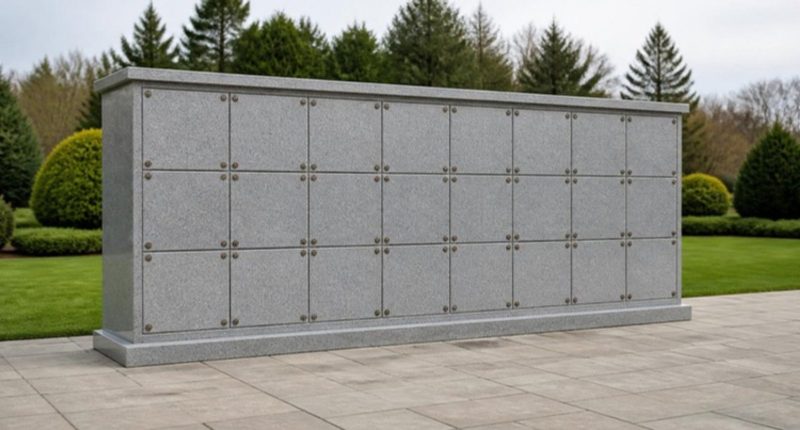
There is no single standard columbarium niche size. Niche dimensions are set by the manufacturer and the design, and published sizes differ from one cemetery to the next. That makes niche size something you specify for your own project. A good columbarium plan starts with what each niche needs to hold, then works outward to capacity, layout, site, materials, and the rules that will govern the structure for decades.
This guide is written for the people who have to make those decisions: cemetery and memorial park managers, church committees, and the monument dealers and funeral homes that help them. It covers what to decide, what to confirm with a supplier, and what to confirm with local authorities before a project is quoted or approved. It is a planning resource, not engineering, legal, or building-code advice.
Why More Properties Are Planning Columbaria
Cremation is now the majority choice in the United States. The Cremation Association of North America reports a U.S. cremation rate of 62.8% for 2025 and projects 69.1% by 2030 (CANA industry statistics). Many families who choose cremation still want a permanent place to visit, and a columbarium provides one in a compact footprint. For a cemetery it can extend the life of limited land. For a church it can bring memorialization onto the property the congregation already cares for.
Columbarium Niche Sizes: Why There Is No Single Standard
Published niche dimensions vary widely, even among public cemeteries. Two examples show the range:
- The U.S. Department of Veterans Affairs describes the columbarium niche in its guidance for veterans cemetery projects as 10 1/2 inches by 15 inches by 20 inches deep, measured at the face, sized to accept the VA’s own niche cover (VA National Cemetery Administration).
- The Town of Plymouth, Massachusetts lists the inside dimension of each niche in its columbaria as 11 1/2 inches deep by 11 3/4 inches wide by 11 3/4 inches tall, and allows one or two urns per niche (Town of Plymouth columbarium rules).
Both are correct for their own structures, and neither is a rule for anyone else. The VA niche is 20 inches deep, and the Plymouth niche is 11 1/2. Treat any dimension you see quoted online, including figures described as standard, as an example from one supplier or one cemetery.
The Dimensions to Confirm for Every Niche
When you compare columbarium options, ask each supplier for the same set of measurements so the numbers can be compared directly:
- Interior height, width, and depth of the niche, not the size of the front.
- The clear opening an urn must pass through, which can be smaller than the interior if there is a frame, lip, or inset.
- Usable depth once the front and its fasteners are in place.
- The size and thickness of the niche front, which sets the space available for lettering.
- Whether every niche in the structure is the same size, or whether rows or sides differ.
Single and Companion Niches
Decide early whether niches are intended for one urn or two. A companion niche is not automatically twice the size of a single. Whether two urns fit depends on the urns themselves, so an urn that holds the right volume can still be too tall or too wide for the opening. Some cemeteries leave it to the family to check the fit. Your policy should say how many urns a niche may hold and should give families the interior dimensions in writing, so that the question is settled before an inurnment is scheduled.
Decide Capacity and Layout Before You Request a Quote
The number of niches drives almost every other decision, including footprint, foundation, cost, and how long the structure will serve the property.
How Many Niches to Plan
There is no reliable formula for niche count. The useful inputs are local: how many cremation families the cemetery serves each year, how many members of a congregation express real interest, how quickly comparable properties nearby have filled their columbaria, and how much capital the organization can commit before niches are sold. A written interest survey or a pre-sale period gives a church committee firmer ground than an estimate.
Projects are often built in phases for this reason. A first structure meets early demand, and the site plan reserves room for matching units later. If you expect to expand, say so at the start. It affects where the first unit sits, how the paving and landscaping are laid out, and whether the supplier can match granite color and niche-front details years from now.
Configuration
Columbaria are produced in several basic forms, and the right one depends on the space and on how visitors will approach it:
- Single-sided units place all niches on one face. They suit a location against a wall, a hedge, or a property edge.
- Double-sided units hold niches on both faces and need clear, comfortable access on each side.
- Hexagonal and octagonal units place niches on each face of a six-sided or eight-sided structure. They work as a focal point in a cremation garden with a walkway all the way around.
- Wall-integrated or custom structures are designed for a specific building or landscape and often involve an architect or design professional.
Think about height as well as footprint. Very high and very low rows can be harder for families to visit and for staff to serve. As one reference point, the VA recommends that columbaria built under its guidance be no more than five units high. That recommendation applies to veterans cemetery projects and is not a general requirement, but the underlying concern is worth weighing on any project.
Site, Foundation, and Installation Questions to Settle Early
A granite columbarium is a heavy, permanent structure. The requirements for supporting and placing it depend on the specific unit, the soil, the climate, and local rules, so get confirmed answers for your own project. Before a design is approved, settle the following.
- Foundation. Ask the supplier for the weight of the unit and the foundation it requires. Ask who designs the foundation, who builds it, and whether a licensed engineer or design professional needs to be involved for your site.
- Drainage and water. Ask how the structure sheds water and how the site should drain around it. The VA’s guidance for veterans cemetery columbaria, for example, calls for a sloped, waterproof cap and a gravel drainage strip at the edge of the slab. Your supplier and site designer should tell you what applies to your unit and location.
- Delivery and placement. Confirm how the unit arrives, what equipment is needed to set it, and whether the delivery vehicle and lifting equipment can reach the location. Check gates, overhead lines, paving limits, and nearby graves or structures.
- Installation responsibility. Establish in writing who sets the unit, who is responsible for the foundation being ready and level, and who handles damage or correction if something does not fit.
- Visitor access. Plan the approach, the paved area in front of the niches, seating, and lighting. Accessibility requirements depend on the type of owner and project, so confirm with your design professional and local building department how accessibility rules, including the ADA Standards for Accessible Design, apply to yours.
Approvals and Regulation
Rules for columbaria are set locally and by state, and they differ. Depending on where the project is and who owns it, you may need to address zoning, a building permit, setbacks, state cemetery regulation, or requirements for how funds from niche sales are held. Religious organizations may be treated differently from commercial cemeteries, depending on the state. Confirm the requirements with the local building and zoning office, the state agency that regulates cemeteries, and the organization’s own legal counsel or governing body before committing to a design. A supplier can provide product specifications to support those conversations, but approval is the owner’s responsibility.
Granite, Finish, and Niche Fronts
Material choices affect appearance, upkeep, and how well later additions will match.
- Granite and color. Choose a stone that suits the property and ask whether the same color can be supplied for future phases. Natural stone varies between quarry lots, so ask how the supplier handles matching.
- Finish. Polished, honed, and textured finishes weather and show marks differently. Ask to see samples of the actual finish outdoors where possible.
- Niche fronts. Confirm the front material and thickness, how each front is fastened, and how it is removed and replaced for an inurnment. Some designs use visible fasteners such as bronze rosettes, and others conceal them.
- Replacement fronts. Ask whether spare or replacement fronts can be ordered later in the same stone, and consider ordering extras with the original unit.
Lettering and Personalization Rules
A columbarium looks orderly over time only if the lettering is consistent, and consistency has to be decided before the first niche is inscribed. Published cemetery rules show how specific this can be. Plymouth’s rules, for example, limit what may appear on a faceplate, name a single permitted font, set letter heights for the surname, first name, and dates, and require engraving to be done on site.
Your rules may be looser or stricter, but they should answer the same questions:
- What may be inscribed: names, dates, emblems, epitaphs, or portraits.
- The lettering style, letter sizes, and layout, including how a second name is added to a companion niche.
- Whether fronts are lettered on site or removed and sent to a shop, and who is approved to do the work.
- Who pays for lettering and who is responsible if a front is damaged.
The lettering method matters here as well. Sandblasted lettering and laser etching give different results on different granites, and not every method suits every color of stone. Our guide to sandblasting and laser etching explains how the two methods differ.
Policies and Records
The structure is only part of the project. Before niches are offered, the owner should have written answers for who is eligible, what a niche purchase includes, who is permitted to open a niche, what urn materials are accepted, and what happens if the structure is ever damaged, moved, or closed. Each niche needs a permanent identifier, and each inurnment needs a durable record. These policies also shape the specification. A rule that every niche holds two urns, for example, sets the minimum interior size you can accept.
Columbarium Project Planning Checklist
Use this list to prepare for a supplier conversation. Not every supplier will need every item, and a supplier may ask for details that are not listed here.
- ☐ Project location and owner type (cemetery, memorial park, church, or other organization)
- ☐ Indoor or outdoor installation, and the climate conditions at the site
- ☐ Number of niches needed now, and the number expected in later phases
- ☐ Single niches, companion niches, or a mix, and the number of urns allowed per niche
- ☐ The urn sizes the niches must accept, and the minimum interior dimensions that follow from them
- ☐ Space available, including clearances for visitors on every side with niches
- ☐ Preferred configuration: single-sided, double-sided, hexagonal, octagonal, or custom
- ☐ Granite color and finish, and the need to match existing structures or future phases
- ☐ Niche front material, fastening method, and any spare fronts required
- ☐ Lettering rules: content, font, letter sizes, method, and who will do the work
- ☐ Emblems, artwork, or portraits to be allowed
- ☐ Site restrictions, including access for delivery vehicles and lifting equipment
- ☐ Who will design and build the foundation
- ☐ Who will set the unit, and who is responsible for site readiness
- ☐ The approvals required and the authority that grants each one
- ☐ Target dates for approval, delivery, and dedication
Where Interglo Stone Fits
Interglo Stone is a granite memorial company in Elberton, Georgia, in business since 1998. Our catalog includes granite columbaria in single-sided, double-sided, hexagonal, and octagonal configurations, with listed capacities from 6 to 96 niches, alongside other cremation memorials. Product listings describe each model, and our team can confirm current specifications, including interior niche dimensions, for the model you are considering.
If you are preparing to request pricing, our article on what to include in a wholesale quote request covers the details that help a supplier respond accurately.
Frequently Asked Questions
Is there a standard columbarium niche size?
No. Niche dimensions depend on the manufacturer and the design. Published examples from public cemeteries range from roughly a foot in each direction to niches 20 inches deep. Always confirm the interior dimensions and the clear opening for the specific unit.
How many urns fit in a columbarium niche?
It depends on the interior size of the niche and the size of the urns. Some cemeteries permit one or two urns per niche and leave it to the family to check that both will fit. Owners should set the number in their written policy and publish the interior dimensions.
How many niches should a church or cemetery plan for?
Base the number on local evidence such as recorded interest, cremation volume, and how quickly nearby columbaria have filled. Owners often build a first phase and reserve space for matching units later.
Does a columbarium need a permit or an engineered foundation?
Requirements vary by location, owner, and structure. Confirm them with the local building and zoning office and the state agency that regulates cemeteries, and ask the supplier what foundation the specific unit requires.
Start With a Clear Specification
A columbarium project goes more smoothly when the owner arrives with decisions made: what each niche must hold, how many are needed, where the structure will stand, and which rules apply. If you would like to discuss a columbarium project or confirm specifications for a model in our catalog, contact Interglo Stone, call (706) 208-1045, or email Sales@IntergloStone.com.