Sandblasting vs. Laser Etching: How Monument Lettering and Portraits Are Actually Produced

How sandblast engraving and laser etching actually work, where each is used, and what monument dealers and distributors should ask a supplier about lettering and portrait work.
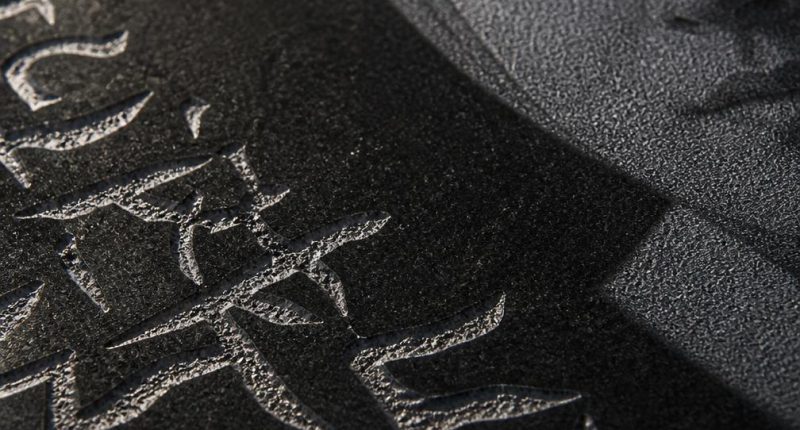
A monument dealer comparing quotes from two wholesale suppliers will usually see the same two lettering methods listed: sandblast engraving and laser etching. The two processes work differently, produce a different look on the finished stone, and are suited to different parts of a design. Understanding the difference matters when you are reviewing a supplier’s product photos, specifying a custom order, or explaining to a customer why the lettering and the portrait on the same monument were produced two different ways.
This guide covers what each process actually does to the stone, where each is typically used, and the questions worth asking a supplier before you commit to one method over the other for a specific design.
What Sandblast Engraving Actually Is
Sandblast engraving is a physical, subtractive process. A stencil is applied over the polished granite surface, and the areas meant to be engraved are cut away, exposing bare stone. Compressed air then propels an abrasive, commonly aluminum oxide grit, through those exposed areas at high pressure, physically removing stone to create the lettering, dates, or artwork. The rest of the polished surface stays protected under the stencil.
The Elberton Granite Association’s own trade publication describes several depth variations available with this method, including “skin sunk,” “frosting,” “v-line,” “groove,” and “u-sunk” effects, and notes that sandblasting can be done in an enclosed sandblasting room or on site at the cemetery, depending on the job. Beyond straight lettering, the same publication notes it can be used to shape-carve decorative images such as roses or praying hands.
Because the process actually removes material, sandblast engraving produces a channel with real, measurable depth. That physical depth is why it is generally the method used for names, dates, and short inscriptions: it stays legible from a distance and holds up well against decades of outdoor exposure. Sandblasted lettering is sometimes filled with lithochrome paint to add contrast, and that paint fill can need refreshing over time even though the engraved depth itself does not disappear.
What Laser Etching Actually Is
Laser etching works on the surface rather than by removing depth from the stone. A computer-guided laser passes over the polished granite and alters or removes a very thin layer of the polish, exposing the lighter-toned stone underneath. Because the laser can be controlled with fine precision, it is capable of reproducing continuous-tone images such as portraits, scenes, and detailed artwork, results that are difficult or impossible to achieve with a stencil and abrasive alone.
Laser etching reads best on dark, polished granite, since the contrast between the untouched polish and the lightened, etched surface is what makes the image visible. It is generally not the method used for a monument’s primary lettering, since it does not cut a physical channel the way sandblasting does. Its strength is fine detail and photographic likeness, not bold, load-bearing text.
How the Two Methods Compare on the Same Monument
In practice, the two methods are often not competitors so much as complements. A common approach on a single monument is to sandblast the primary lettering, names, dates, and any short epitaph, while laser etching a portrait or detailed scene elsewhere on the die. That combination uses each method for what it does best: physical depth and durability for the text that needs to remain legible for decades, and surface precision for the image that benefits most from fine detail.
Sandblast engraving:
- Physically removes stone through a stencil, creating a channel with real depth.
- Well suited to names, dates, short inscriptions, and simple carved shapes.
- Depth is fixed once cut; a lithochrome paint fill, if used, may need refreshing over time.
- Can be done in an enclosed blasting room or on site at the cemetery.
Laser etching:
- Alters a thin surface layer using a computer-guided laser; does not cut a deep physical channel.
- Well suited to portraits, scenes, and other continuous-tone, photographic detail.
- Reads best on dark, polished granite, where the contrast is strongest.
- Typically used for portrait or accent artwork rather than a monument’s primary lettering.
Weathering, Maintenance, and Why Sources Disagree
Sources across the monument industry do not fully agree on which method holds up better over time, and buyers should treat confident claims in either direction with some skepticism. Suppliers who specialize in sandblasting tend to emphasize that a physically deeper engraving is inherently more weather-resistant. Suppliers who specialize in laser equipment tend to emphasize that a laser leaves the stone’s surface intact rather than cutting into it, which they argue reduces the risk of chipping around lettering edges. Both points have some logic behind them, and neither is an independently verified, universal ranking of one method over the other.
What actually determines how well a piece of lettering or etching holds up is a combination of factors: the granite’s own density and finish, the climate and exposure the monument sits in, how deep or precise the original work was, and ordinary weathering that affects any outdoor stone over decades. Rather than accepting a supplier’s general durability claim at face value, ask what specifically they do to make lettering and etching last, and ask to see examples of their own work that are several years old.
Questions to Ask a Supplier About Lettering and Portrait Work
Before specifying sandblasting, laser etching, or a combination of both on an order, ask a prospective supplier:
- Which method they recommend for this specific design, and why, rather than defaulting to whichever method they happen to offer.
- Whether they can show finished examples of both methods on a similar granite color and finish to the one you are ordering.
- Whether portrait or etching work is done in-house or coordinated through a local etching partner, and how that affects turnaround time.
- What the proofing and revision process looks like for a portrait or detailed etching specifically, since a photo-based image carries different risks than text.
- How they handle a case where the finished etching or engraving does not match the approved proof.
These are the same categories of questions worth asking about any wholesale granite supplier’s proofing and communication process generally, applied specifically to lettering and portrait work.
Where Interglo Stone Fits
Interglo Stone utilizes a sandblasting facility located in Elberton, Georgia, producing carvings and lettering for the memorial products it supplies to monument dealers, funeral homes, cemeteries, and distributors. For etching, Interglo Stone coordinates laser etching, hand-etching, and full-color etching work through a local etcher, and can also arrange porcelain portraits in a range of shapes, sizes, and colors, including handling the final installation. You can read more about Interglo Stone’s granite monument manufacturing capabilities, including how lettering and design requests move through production, or see the company’s background and Elberton operations. For more on why Elberton itself became the center of this kind of granite manufacturing, see why Elberton, Georgia is called the “Granite Capital of the World.”
FAQ
Which method is better for a photo-realistic portrait?
Laser etching is generally the better choice for a photo-realistic portrait or detailed scene, since it can reproduce continuous tone and fine detail that a stencil-and-abrasive process cannot match. Sandblasting remains the more common choice for the monument’s primary lettering.
Can sandblasting and laser etching be combined on the same monument?
Yes. It is common for a monument to have sandblasted names, dates, and inscriptions alongside a laser-etched portrait or scene elsewhere on the die. Ask a supplier whether they coordinate both processes on a single order or require them to be specified separately.
Does laser etching work on any granite color?
Laser etching reads most clearly on dark, polished granite, where the contrast between the untouched polish and the lightened etched area is strongest. On lighter granite colors, the contrast is less pronounced, so ask a supplier for an example on the specific color you are ordering before committing to a laser-etched portrait.
Will sandblasted or laser-etched lettering fade over time?
It depends on the stone, the finish, the climate, and how the work was originally done, and suppliers disagree on which method holds up better in general. Rather than relying on a general claim, ask a prospective supplier what specifically they do to support long-term legibility and ask to see examples of their own work that are several years old.
Call to Action
If you are specifying lettering, portrait, or etching work for an upcoming order, Interglo Stone’s team can walk through which approach fits your design. Reach out at (706) 208-1045 or Sales@IntergloStone.com to discuss your requirements.