

Black Granite vs Gray Granite: Which One Lasts Longer?

Key Takeaways Choosing between memorial stones is a deeply personal decision that balances aesthetics, durability, and budget to ensure a fitting tribute. This overview provides the essential information needed to…

Key Takeaways
Choosing between memorial stones is a deeply personal decision that balances aesthetics, durability, and budget to ensure a fitting tribute. This overview provides the essential information needed to select the ideal marker.
- Black granite offers a modern, high-contrast look suitable for precise laser engravings.
- Gray granite remains a popular, cost-effective choice known for its classic appearance.
- Both stone types are inherently durable, though maintenance requirements vary based on surface finish.
- Proper installation and deep carving are critical to protecting your investment for generations.
- Understanding the material properties helps ensure your memorial retains its beauty in any climate.
Material composition and durability
Selecting granite requires understanding how available stones differ in composition, appearance, and performance. Aesthetic preference matters, but the stone’s characteristics, finish, cemetery requirements, and local conditions should also inform the decision.
Geological formation of black granite
Black granite is technically categorized as a gabbro or related igneous rock rather than true granite, but it shares the same metamorphic toughness. It forms through slow cooling deep within the earth, resulting in a fine-grained, highly crystalline structure that gives it that signature deep, reflective sheen.
Structural characteristics of gray granite
Gray granite is a true igneous rock containing a balanced mix of quartz, feldspar, and mica minerals formed at high pressures. Its characteristic speckled appearance comes from the visible grains of these various minerals, which provide a reliable and porous surface that handles expansion and contraction quite well.
Comparing mineral density and porosity
When comparing granite options, ask how factors such as mineral composition and porosity may affect water absorption and long-term wear.
| Feature | Black Granite | Gray Granite | Typical Impact |
|---|---|---|---|
| Porosity | Extremely Low | Moderate | Water absorption rate |
| Density | High | High | Resistance to cracking |
| Grain Size | Fine | Coarse | Surface smoothness |
By reviewing these figures, families can better anticipate how each stone type will interact with local environmental pressures over time.
Resistance to mechanical wear and impact
Both black and gray stone options offer extraordinary resilience against outdoor elements when they are sourced to high-quality standards. While black granite is often denser, the naturally courser texture of gray granite can sometimes disguise surface blemishes caused by lawn maintenance equipment or debris, making it a very practical choice for high-traffic or public memorial gardens.
Weathering and environmental resilience
Exposure to the sun, rain, and fluctuating temperatures is the primary test for any outdoor memorial. Careful planning during the design phase allows you to predict how your choice of stone will evolve, ensuring that the black and gray granite differences are managed to maintain the memorial’s integrity for years to come.

How sun exposure affects polished finishes
Polished surfaces act like mirrors, reflecting intense UV rays that can degrade the surface of lesser materials over time. High-quality granite resists this process, but a deep black finish might absorb more heat, whereas lighter gray granite stays cooler under the direct summer sun.
Managing moss and lichen growth on gray granite
Because it has a slightly higher porosity than its black counterpart, gray granite can occasionally act as a host for organic material like moss. Routine cleaning with mild, non-acidic solutions usually keeps these elements at bay.
Susceptibility to thermal expansion and cracking
Thermal expansion is a natural physical response to heat, where the stone expands slightly during the day and contracts at night. Both materials move at the microscopic level, but because they are so stable, these shifts rarely result in structural failure unless there is a flaw in the initial slab or poor foundation work.
Long-term performance in humid or coastal climates
In humid or coastal environments, salt, moisture, biological growth, and repeated wetting can affect a memorial’s appearance over time. Ask how the selected granite and finish should be maintained under local conditions.
Engraving visibility and lettering longevity
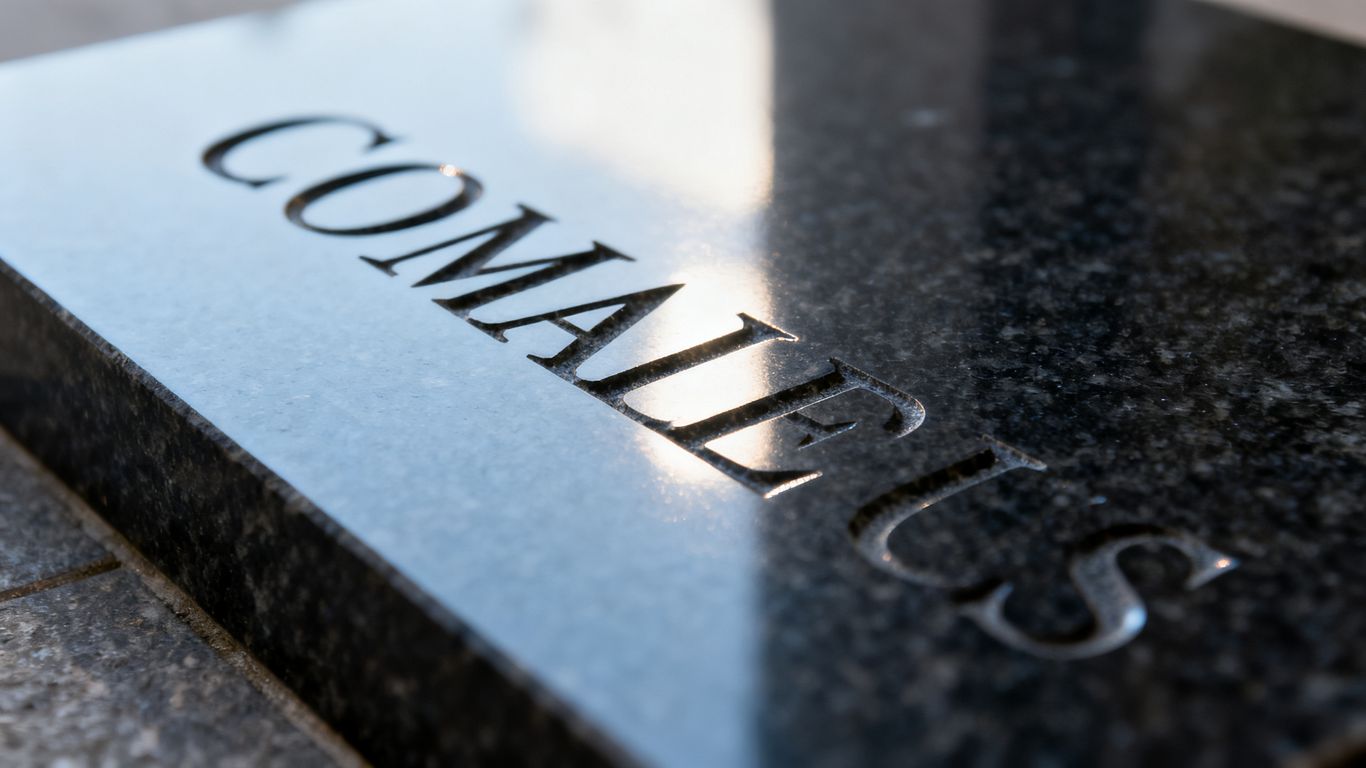
Visibility is the most important factor when you want a message or name to last; clarity and contrast determine how easily a tribute can be read by visitors. Finding the right granite memorial colors involves balancing your design preferences with the natural contrast levels offered by the stone’s color.
Achieving contrast on black granite surfaces
Black granite provides the ultimate canvas for bright, white lithichrome paint or fine laser etching, which creates high-contrast, readable results. This is often the preferred choice for those wanting to utilize black granite headstone designs to feature detailed imagery or portraits that need sharp detail to stand out.
Legibility challenges with gray granite
Gray granite, with its natural flecks and medium-tone background, can sometimes make light-colored lettering difficult to see if the chosen font is too thin. Professionals often address this by using wider, bolded lettering styles or by carving deeper into the stone to create natural, dark shadows that enhance readability.
Why deep carving is essential for both colors
Regardless of the stone you pick, the depth of the carving is what truly keeps an inscription legible after decades of weathering. Deep V-cut or sandblasting techniques can help ensure that even as the stone surface undergoes natural erosion, the inscription remains etched clearly into the bedrock of the memorial.
Preservation techniques for laser etching versus hand-carving
Laser etching allows for photographic detail, while traditional hand-carving provides a classic, sculptural depth that captures light beautifully. To maintain either, these simple preservation steps can help:
- Periodically rinse the inscription with clean, soft water to remove dust.
- Avoid using abrasive tools or harsh chemicals near the lettering.
- Schedule a professional inspection if you notice fading or debris buildup.
- Consult a monument professional if touch-ups on painted lettering are needed.
Cost and market availability
Understanding the financial side of your purchase ensures that you can move forward with confidence and clarity, knowing exactly what drives the price of these monuments. Price variations are generally dictated by supply chain factors rather than the durability or inherent quality of the granite itself.
Factors driving the price of black granite
Black granite is often sought after for its refined aesthetic, which can influence market demand and pricing. While it is occasionally more expensive than gray due to quarrying difficulty and global shipping logistics, it remains a valuable investment for those craving a modern, sleek appearance.
Supply chain consistency for gray granite
Gray granite is readily available in many parts of the world, which generally keeps it more accessible for families on a budget. The material is consistently high-quality, and a steady supply chain helps keep it accessible for many buyers.
Balancing initial investment with expected lifespan
Choosing a memorial is a balance between your current budget and the desire for a permanent tribute.
Regional availability and transport costs
Geography can affect which stones are available and how much transportation adds to the total cost. Ask for an itemized quote that identifies shipping, delivery, and any location-based charges before ordering.
Impact of surface finish on longevity
How the surface of the granite is polished can change how it interacts with the elements and how it wears down over time. Finishing is the final step, and it is crucial for ensuring the stone remains as beautiful as it is durable.
The role of polished surfaces in protecting granite
Polished finishes close off the pores of the stone, acting as a natural shield against water and environmental buildup. This is why a polished finish on the face of the monument is highly recommended for longevity, as it naturally repels the elements.
Maintenance differences for honed or matte finishes
Matte or honed finishes provide a softer, non-reflective look, but they are more susceptible to picking up debris or environmental residues that might collect in the pores.
How finishing techniques affect water absorption
Water is the primary cause of eventual stone deterioration, especially in freezing climates where trapped moisture can expand. A high-quality polish minimizes this risk by creating a smooth surface that allows water to bead off and run away from the lettering, rather than soaking into the stone.
Selecting the right finish for local weather conditions
Finish options can perform differently depending on the stone, climate, exposure, and maintenance conditions. Ask a qualified monument specialist which finish is appropriate for the selected granite and cemetery environment.
Conclusion
Selecting between black and gray granite for a memorial depends largely on your personal aesthetic preference and the specific design you wish to feature. Both materials provide excellent durability and structural integrity, meaning that regardless of the color you choose, you are creating a lasting, dignified tribute. By focusing on quality carving and the right protective finish, you can ensure your choice remains a beautiful, resilient landmark that honors your loved one for generations.
Frequently Asked Questions
Does black granite last longer than gray granite?
Both black and gray granites are extremely durable and can last for centuries, so there is no significant difference in their natural lifespan when properly maintained.
Which color is better for outdoor readability?
Black granite typically offers better contrast for lettering and artwork, though gray granite can be just as readable if the inscription is carved deeply enough.
Can I clean a granite headstone myself?
Yes, you can gently clean a headstone with soft water and a mild non-abrasive soap, but you should avoid strong chemicals or sharp tools that could scratch the surface.
Do weather conditions dictate which stone I should pick?
Local weather can influence your choice if you live in an area with extreme freeze-thaw cycles or high humidity, where professional advice on stone sealing and finish becomes vital.
Is black granite always more expensive?
Price is driven by market availability and transport costs rather than inherent quality, so while black granite is often priced higher due to demand, both colors come in various premium grades.
Will moss grow on my granite marker?
While moss can grow on any stone placed outside, it is more commonly noticed on lighter or more porous granite surfaces, though it is usually easy to remove with gentle maintenance.
What is the advantage of a polished finish?
A polished finish seals the stone surface, making it easier to clean and providing better protection against water absorption, which helps maintain the stone’s integrity in various climates.