Why Elberton, Georgia Is Called the “Granite Capital of the World”

The history, geology, and manufacturing scale behind Elberton, Georgia’s granite industry, and why so many wholesale monument suppliers are based there.
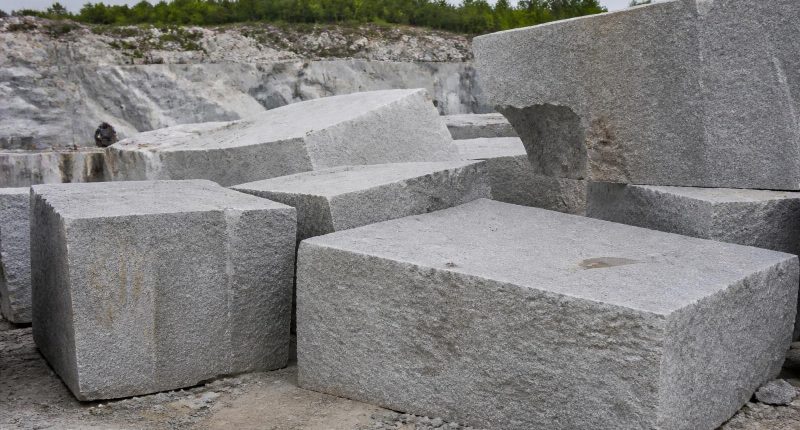
Ask why so many wholesale granite monument suppliers, including Interglo Stone, are based in one small city in northeast Georgia, and the answer traces back more than a century to a specific vein of stone and the industry that grew up around it. Elberton, Georgia has called itself the “Granite Capital of the World” since the early 1900s, and the claim holds up on the numbers: more than 40 active quarries, over 150 manufacturing plants, and an industry that produces a meaningful share of the granite memorials installed in cemeteries across the United States.
For a monument dealer, funeral home, cemetery, or distributor evaluating a granite supplier, understanding why Elberton earned that title is not just historical background. It explains why a single region can support the specialized quarrying, cutting, and finishing infrastructure a granite monument actually requires, and why so many suppliers a buyer encounters while sourcing wholesale granite trace back to the same place.
How Elberton Became the “Granite Capital of the World”
Elberton predates its granite industry by more than a century. Settlers moved into the area before the American Revolution, and the city was officially incorporated in 1803 as an agricultural community. That changed after the Civil War. Granite quarried from the area was first used to rebuild railroad infrastructure damaged during the war, and in 1889 the city’s first commercial quarry opened to supply granite for home foundations and chimney stones.
The industry grew quickly from there. Railroad lines widened Elberton’s reach to national markets, and skilled Italian stonecutters immigrated to the county between 1900 and 1930, bringing trade knowledge that helped the local industry mature (New Georgia Encyclopedia, “Elbert County”). Elberton called itself the “Granite City” in the 1890s, then the “Granite Capital of the South” after the turn of the century, and soon after claimed the title it still uses today: “Granite Capital of the World” (New Georgia Encyclopedia, “Elberton”). By the 1920s, granite had overtaken agriculture as the county’s economic center. The industry proved resilient through the Great Depression, when it expanded rather than contracted, and entered its most prosperous era after World War II.
The Geology Behind Elberton’s Granite
The name is not purely a marketing claim. Geologists estimate the Elberton granite deposit at roughly 35 miles long, 6 miles wide, and 2 to 3 miles deep, a figure corroborated independently by both the New Georgia Encyclopedia and the Elberton Granite Association’s published granite facts. The deposit is a biotite granite, formed through a slow underground cooling process over geologic time. Its blue-gray color comes from biotite, a black mica mineral, mixed with the lighter feldspar and quartz that make up most of the rock.
The Elberton Granite Association’s own published material lists an average compressive strength of 23,450 pounds per square inch across sampled quarries, a physical property directly relevant to a monument’s long-term durability. This is the kind of specific, verifiable material data a buyer can reasonably ask any granite supplier to provide, whether the granite in question comes from Elberton or elsewhere.
From Quarry Block to Monument: Elberton’s Manufacturing Base
Geology alone does not explain the “Granite Capital” title. What sets Elberton apart is the manufacturing base built around that deposit. The Elberton Granite Association counts more than 150 manufacturing plants (locally called “sheds”) turning rough quarried blocks into finished memorials, markers, and mausoleums, supported by more than 40 active quarries and roughly 220 companies operating in granite production or related services. According to one industry history account, roughly 90 percent of the granite quarried in the area is ultimately used for cemetery memorials rather than building or landscaping stone, a specialization that distinguishes Elberton from other U.S. granite-producing regions.
That manufacturing base includes the specific processes a monument actually requires beyond quarrying and cutting: sandblasting for lettering and artwork, polishing, and increasingly laser and hand etching for portraits and detailed designs. A monument dealer or cemetery working with an Elberton-based supplier is drawing on a regional concentration of exactly this kind of specialized finishing capability, not just a source of raw stone.
The Elberton Granite Association and the Industry’s National Reach
Much of this activity is organized through the Elberton Granite Association, founded in 1951 as local business leaders sought a unified voice for the area’s growing granite trade. Today the association describes itself as the largest trade association of granite quarriers and manufacturers in the United States, representing roughly 100 member companies and about 1,500 employees. It reports that its member firms manufacture more than 250,000 granite memorials a year, shipped to customers across the country.
This scale is one reason a monument dealer, funeral home, or cemetery sourcing wholesale granite nationally is likely to encounter multiple suppliers based in or near Elberton. The concentration of quarries, manufacturing plants, skilled labor, and trade infrastructure in one region makes it a natural hub for the industry, independent of any single company’s own claims.
Why This Matters When You Are Sourcing Wholesale Granite Monuments
None of this history or geology substitutes for evaluating a specific supplier on its own merits. The practical questions a buyer should ask any prospective supplier, about material consistency, product range, proofing, communication, and shipping, still apply regardless of where that supplier is based. But understanding Elberton’s role in the industry gives a buyer useful context: a supplier based here is operating inside a mature regional ecosystem with more than a century of accumulated quarrying, cutting, and finishing expertise, and a trade association that has tracked and organized the industry since 1951.
Interglo Stone’s Place in the Granite Capital
Interglo Stone was founded in 1998 and operates from Elberton, Georgia, within the same regional granite industry described above. Read more about Interglo Stone’s history and background, or see how that regional foundation shows up in Interglo Stone’s own granite monument manufacturing capabilities.
FAQ
What makes Elberton granite suitable for granite monuments?
Elberton granite is a biotite granite with documented physical properties, including an average compressive strength of 23,450 psi reported by the Elberton Granite Association, and a blue-gray color from its biotite content. Those are the kind of specific properties that matter for monument durability, though any granite’s suitability should be confirmed against the same material questions regardless of its source region.
Why are so many wholesale granite monument suppliers based in Elberton?
The concentration of more than 40 active quarries, over 150 manufacturing plants, and roughly 220 related companies in one area created the infrastructure, skilled labor, and trade organization, the Elberton Granite Association, founded in 1951, that made large-scale monument manufacturing practical in one place. That regional concentration, not any single company’s own claim, is what sustains Elberton’s role in the industry.
Is all granite quarried in Elberton the same?
No. Even within one region, individual quarries produce granite with variations in color, grain, and veining. A buyer sourcing from any Elberton-based supplier should still confirm which specific quarry or granite type a given order will use, the same material-consistency question that applies to any wholesale granite purchase.
Call to Action
Interglo Stone has operated from Elberton, Georgia since 1998, supplying wholesale granite headstones and memorial products to monument dealers, funeral homes, cemeteries, and distributors. If your business is exploring granite monument suppliers, our team is available at (706) 208-1045 or Sales@IntergloStone.com to discuss your requirements.