
Marble vs Granite Headstones: Which Should You Choose?

Key Takeaways Choosing between marble and granite headstones comes down to more than appearance. Consider the stone’s weather resistance, the cemetery’s rules, the design you want, and the care your…

Key Takeaways
Choosing between marble and granite headstones comes down to more than appearance. Consider the stone’s weather resistance, the cemetery’s rules, the design you want, and the care your family can reasonably provide.
- Granite generally offers stronger long-term resistance to outdoor weather and everyday wear.
- Marble has a classic appearance and distinctive veining, but its surface and inscriptions may weather more visibly.
- Size, thickness, finish, engraving, installation, delivery, and cemetery fees all affect the final price.
- Cemetery regulations should be confirmed before you approve a design or place an order.
- The right memorial is the one that reflects your loved one while fitting the family’s practical needs and budget.
Understand the key differences between marble and granite headstones
Marble and granite are both natural stones with long histories in architecture and memorial design. They do not age in exactly the same way, however, and that difference matters when a headstone will remain outdoors for decades. A thoughtful comparison of granite and marble headstones can help families separate the emotional appeal of a material from its practical performance. The goal is not to find one universally correct stone, but to choose a fitting and durable tribute.
How marble and granite are formed
Granite is an igneous rock formed when molten material cools slowly beneath the earth’s surface. That slow cooling allows visible mineral crystals to develop, giving granite its granular texture and considerable hardness. Marble begins as limestone that changes under heat and pressure, creating a stone with a smoother structure that may contain flowing veins. These different origins help explain why the materials polish, engrave, and weather differently.
Differences in color, texture, and natural pattern
Granite can be found in shades such as gray, black, brown, pink, red, and other naturally occurring tones, depending on its mineral composition. Its pattern may be fine and even or flecked with contrasting crystals. Marble is often associated with white or pale backgrounds and soft gray veining, although it also occurs in other colors. Its appearance tends to feel more fluid and classical, while granite often gives families more flexibility when coordinating color, finish, and lettering.
How each stone responds to outdoor conditions
The stone’s porosity, hardness, and surface finish influence how it reacts to rain, sunlight, freezing temperatures, pollution, and biological growth. Granite is typically less absorbent and more resistant to scratching and surface wear. Marble is comparatively softer and can be affected by prolonged exposure to moisture, salts, and pollutants. Neither material is entirely free from maintenance, but the amount and visibility of change can differ considerably.
What these differences mean for a lasting memorial
A headstone is both a personal object and an outdoor structure. Families often want the inscription to remain readable and the overall form to continue looking cared for as the years pass. Research on gravestone memorial materials commonly points to the same practical question: will the chosen stone suit the site as well as the family’s preferred style? Granite is often selected for its resilience, while marble may be chosen when its traditional appearance carries special meaning.
Compare durability and long-term weather resistance
Outdoor exposure is one of the clearest differences in the marble vs granite headstones decision. A cemetery may subject a memorial to heavy rain, snow, frost, heat, windblown grit, lawn chemicals, and changing humidity. Local conditions can be more influential than a showroom sample suggests, so it is wise to ask how each material has performed in cemeteries near you. A monument professional can also explain how the chosen finish and installation method affect long-term appearance.
Why granite typically handles rain, frost, and temperature changes well
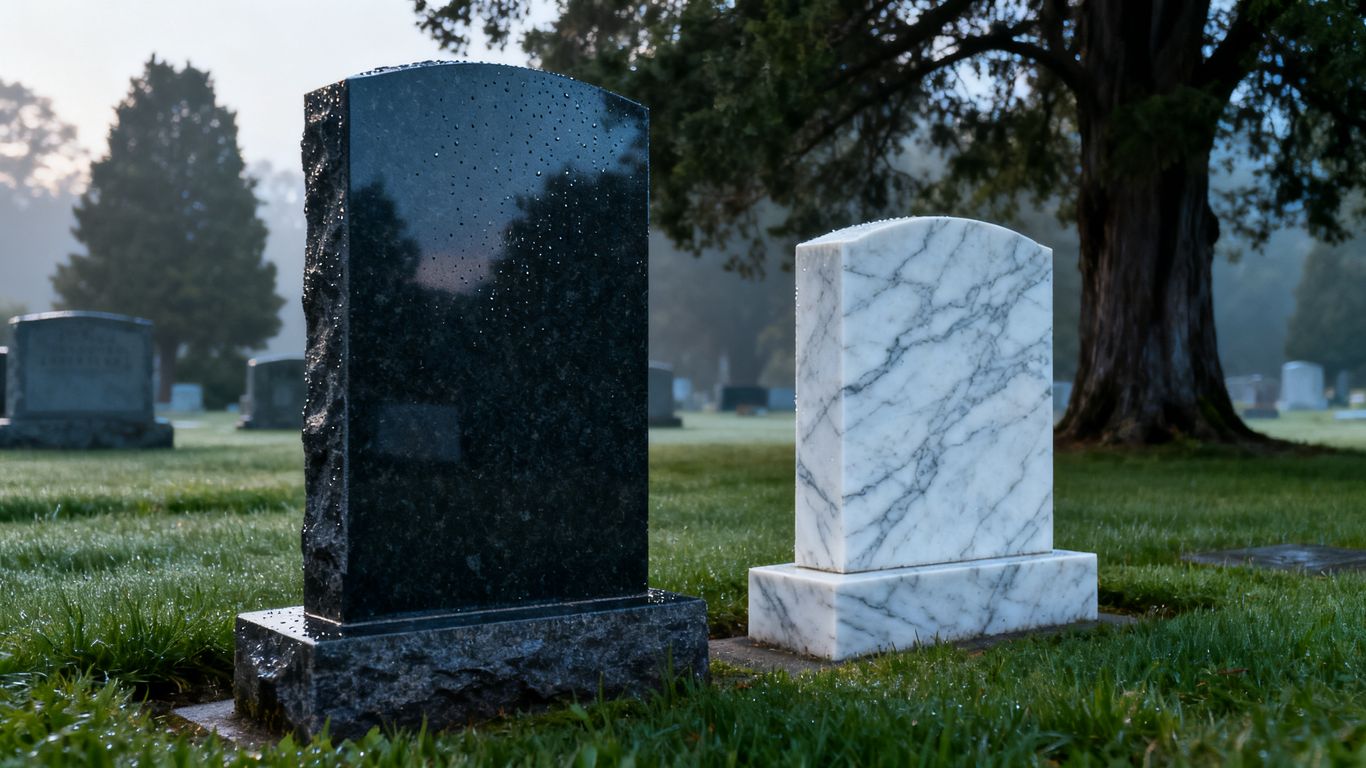
Granite’s hardness and relatively low porosity make it well suited to outdoor use. It generally absorbs less water than marble, which reduces the risk associated with repeated wetting and freezing. A properly finished granite headstone can also resist common scratches, chips, and staining better than softer stone. Severe conditions can still affect any natural material over a very long period, but granite usually provides a dependable balance of strength and manageable care.
How marble can weather, stain, or lose its finish
Marble’s softer, more absorbent surface can show the effects of outdoor exposure more readily. Water, pollution, salts, and organic growth may contribute to discoloration or surface erosion, especially where drainage is poor. Over time, polished areas can become less glossy, and shallow engraved letters may lose some of their definition. That aging is not necessarily a flaw; some families appreciate the softened, historic character, while others prefer a memorial that changes as little as possible.
The impact of climate and local environmental conditions
Climate should be part of the conversation rather than an afterthought. A coastal cemetery may expose stone to salt-laden air, while a cold region may bring repeated freeze-and-thaw cycles. Hot sun, heavy shade, air pollution, irrigation overspray, and nearby trees can also affect cleaning needs. Ask a local monument company which materials and finishes have held up well in the actual cemetery, not merely in a general climate zone.
Expected appearance after years of outdoor exposure
Granite commonly retains its shape, polish, and lettering with relatively little visible change when it is well made and installed. Marble may develop more noticeable patina, softened edges, staining, or diminished contrast around the inscription. A family should decide whether it values maximum visual stability or welcomes a material with a more evident aging process. The broader comparison of marble and granite is useful here because appearance after many years can matter as much as the day-one impression.

Evaluate appearance, inscriptions, and design options
Durability is only one part of a memorial decision. The stone should also provide an appropriate setting for a name, dates, an epitaph, artwork, and the visual details that make the tribute feel personal. Granite’s color range can create contrast with lettering and designs, while marble’s veining can add movement without additional decoration. Before choosing, ask to see full-size examples rather than relying only on small samples or digital images.
Choosing between granite’s color range and marble’s classic look
Granite may suit families seeking a dark black, medium gray, warm brown, pink, or other natural color, along with polished, honed, or more subdued finishes. Marble often appeals to people who prefer a pale, traditional surface and distinctive veining. The surrounding cemetery landscape matters too: a formal garden may complement marble’s classical character, while a wide range of neighboring granite monuments may make granite feel visually consistent. There is no need to force a modern look if a traditional one feels more faithful to the person being remembered.
How clearly lettering and engraved artwork appear on each stone
Lettering depends on the stone’s color, finish, engraving depth, font, and the contrast created by the design. Dark polished granite can provide a strong background for lighter lettering or etched artwork, while lighter granite and marble may call for different treatment to maintain readability. Marble inscriptions can look beautiful at first but may become less distinct as the surface weathers. For families especially concerned with legibility, lasting inscriptions deserve discussion before the material and lettering method are finalized.
Options for portraits, symbols, vases, and custom details
A memorial can include more than names and dates. Portraits, religious or cultural symbols, floral motifs, military emblems, scenes from nature, vases, benches, and other elements may help tell a fuller story. Clear Stream Monuments provides custom headstones and memorials, along with granite products such as cremation memorials, benches, vases, and statues. Ask how the selected stone will accommodate each element, whether the design is etched or carved, and how any attached component will be secured.
Matching the material to the style of the cemetery or memorial
Some cemeteries have a strongly traditional character, while others allow contemporary shapes, color, and polished finishes. The memorial should feel at home in that setting without losing the individuality of the person it honors. Consider the scale of nearby monuments, the amount of text required, the available space, and whether a family plot already has an established material. A simple stone with carefully chosen words can be more moving than an elaborate design that feels crowded.
Compare headstone costs and overall value
Price comparisons can be difficult because two memorials that look similar in a photograph may differ in thickness, finish, engraving, foundation work, and installation. Marble and granite also vary widely by color, source, grade, and availability. Rather than asking only which stone is cheaper, request a written quote that separates the stone, design work, lettering, delivery, setting, and cemetery charges. That makes the decision calmer and prevents an unexpected balance later.
Typical factors that affect marble and granite pricing
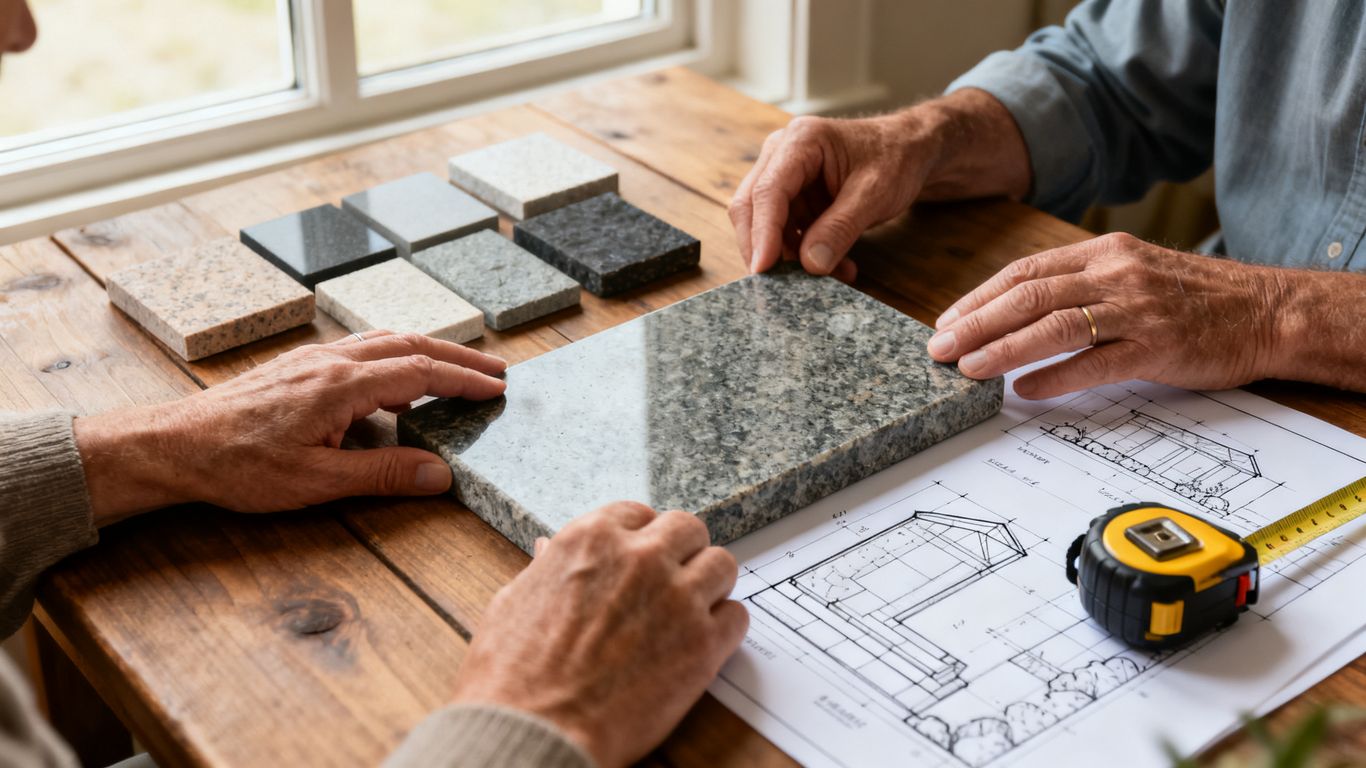
The material itself is only one part of the estimate. Stone color and availability, the monument’s dimensions, the amount of finishing, the number of letters, and the complexity of artwork all influence price. A small, simply engraved marker may cost much less than a large family monument with multiple surfaces and custom imagery. Ask whether the quote covers design revisions and whether taxes or administrative charges are separate.
How size, thickness, finish, and customization change the quote
Larger and thicker pieces require more raw material, handling, and installation support. A high-gloss polish, shaped top, beveled edge, carved relief, ceramic portrait, or extensive inscription can add labor. The layout matters as well: a short name and dates may leave room for a generous design, while a long epitaph may require a larger face. A complete written quote is the best basis for comparing options because it shows what is included rather than inviting guesses from a single total.
Installation, foundation, delivery, and cemetery fees to consider
A headstone must be transported, placed, and supported in accordance with the cemetery’s standards. The final price may include a foundation or setting charge, delivery, permits, inspection, and fees collected by the cemetery. Some cemeteries require an approved installer or charge separately for seasonal work. Clear Stream Monuments emphasizes personal, one-on-one support while helping families arrange custom memorial purchases; ask the company to identify which services are included in its proposal and which are paid to another party.
When a lower upfront price may lead to higher long-term costs
A low initial price can be reasonable, but it should not hide compromises in thickness, lettering, foundation preparation, or installation. A material that needs more frequent cleaning or eventual refinishing may cost more over its lifetime, especially when the cemetery is far from home. Families should also consider whether repairs will be practical if a surface becomes stained or an inscription loses contrast. For a broader perspective on comparing value in a substantial purchase, this long-term value review offers an unrelated but useful reminder to assess quality and service alongside price.
A simple comparison table can make several quotes easier to read side by side. It is not a substitute for a monument professional’s advice, but it helps reveal missing line items.
| Quote detail | Why it matters | Question to ask |
|---|---|---|
| Stone and dimensions | Determines material quantity and visual scale | What are the exact width, height, and thickness? |
| Finish and lettering | Affects appearance and future readability | Which finish and lettering method are included? |
| Artwork and accessories | Shows whether custom details are priced separately | Are portraits, vases, or symbols part of the total? |
| Foundation and setting | Supports safe, compliant installation | Who handles the foundation and placement? |
| Delivery and cemetery fees | Prevents surprises beyond the monument price | Which charges are paid directly to the cemetery? |
After reviewing the table, compare the assumptions behind each quote, not only the totals. Two companies may be pricing different sizes or levels of service, and clarifying that difference is often more useful than negotiating a number without context.
Check cemetery rules and local installation requirements
Cemetery policies can narrow the available choices before a family begins refining the design. Rules may address the type of stone, the monument’s dimensions, the finish, the foundation, the location on the grave, and the wording or symbols allowed. Requirements also vary by cemetery, section, and sometimes by the type of burial. Confirm the rules in writing so that an approved design does not later need to be changed.
Cemetery restrictions on stone type, size, and finish
Some cemeteries permit only certain colors, finishes, or monument styles to maintain a consistent appearance. Others distinguish between upright monuments, flat markers, companion memorials, and cremation memorials. A cemetery may also limit the width of a headstone according to the plot or require approval of a proof before production. Do not assume that a design accepted for one family section will be accepted in another.
Foundation and anchoring standards for headstone installation
The foundation keeps the memorial stable and helps it sit correctly over time. Soil conditions, frost, drainage, monument size, and cemetery policy can all affect the required foundation. Upright pieces may also need approved anchoring or setting methods. A monument company should be able to explain the installation plan in plain language, including who prepares the foundation and who is responsible for final placement.
Permit, delivery, and setting requirements in your area
Before ordering, find out whether the cemetery requires a permit, a site inspection, proof of ownership, or a particular delivery appointment. Some locations restrict the days or seasons when setting can occur. Others require the cemetery itself to complete part of the installation. These details can affect both timing and cost, especially when a memorial is being shipped from outside the immediate area.
Questions to ask a local monument company before ordering
A patient conversation can uncover practical details that are easy to miss while concentrating on the design. Clear Stream Monuments works one-on-one with customers on custom headstones and memorials, so families can use that kind of consultation to clarify the material, proof, timing, and installation process. It is also sensible to compare proposals carefully; this guide to comparing service proposals offers a general approach to evaluating scope, communication, and ownership questions.
Before approving anything, ask:
- Is this stone and size permitted in the specific cemetery section?
- Which foundation, anchoring, delivery, and setting services are included?
- How many proof or design revisions are allowed?
- What happens if the cemetery requests a change or delays installation?
The answers should be clear enough that another family member could understand the plan. If an item is vague, ask for it to be added to the written proposal before making a deposit.
Plan for cleaning, care, and future maintenance
Regular care does not need to be complicated, but it should be gentle and appropriate to the stone. Families may visit often, occasionally, or only when circumstances allow, so a good material is one whose maintenance expectations feel realistic. Cemetery grounds crews may trim around the memorial, but they may not provide detailed stone cleaning. Keep the material, finish, and lettering method in your records for future reference.
Safe cleaning methods for granite headstones
For routine granite care, begin with clean water, a soft cloth or soft natural-bristle brush, and a light touch. Remove loose soil first, work from the top downward, and rinse thoroughly so residue does not dry on the surface. If a cleaner is needed, choose one specifically labeled as safe for the stone and follow its directions. Avoid pressure washing unless a qualified professional recommends a method that will not harm the finish, edges, or lettering.
How to protect marble from discoloration and surface damage
Marble benefits from prompt, gentle attention because its surface can absorb or react to contaminants more readily than granite. Do not use acidic household cleaners, abrasive powders, or rough tools. Be careful with irrigation water, fertilizer, salt, and metal objects that may rest against the stone. When discoloration or biological growth persists, a monument professional can recommend a treatment instead of relying on trial and error.
Common mistakes that can damage stone or lettering
Household bleach, vinegar, strong acids, stiff wire brushes, and aggressive scraping can alter the surface or make lettering less legible. Decorative paint or sealers should not be applied without professional advice, since an unsuitable product may trap moisture or create uneven discoloration. Avoid leaning heavy objects against an upright monument and do not attempt to reset a loose stone yourself. Professional maintenance guidance is useful when a problem involves more than light surface dirt, even though the linked resource concerns a different type of repair.
Repair, refinishing, and inscription services over time
Eventually, a family may need an inscription added, a damaged component repaired, or a surface assessed for cleaning and refinishing. Adding a date or name is usually easiest when the original monument company has retained the design information, but another qualified monument professional may also be able to help. Ask whether the work will match the existing lettering, finish, and artwork. If a repair is proposed, request photographs of similar work and a written explanation of what can realistically be restored.
Choose the right headstone for your family
The best choice balances the character of the memorial with the realities of its location and care. Granite is often the practical favorite for families who want a stable outdoor surface, broad color options, and relatively modest maintenance. Marble can be the more emotionally appropriate choice when its pale color, veining, or traditional character is central to the tribute. Taking time to compare samples, cemetery rules, and complete quotes can make a difficult decision feel more manageable.
When granite may be the better choice
Granite may suit a family that prioritizes resistance to rain, frost, staining, scratching, and long-term surface wear. It can also be a strong option when the design includes detailed engraving, a dark background for contrast, or a larger selection of colors and finishes. Clear Stream Monuments offers a wide selection of granite products, including headstones, cremation memorials, benches, vases, and statues. Those options may help a family coordinate one memorial element with others at the gravesite.
When marble may suit the memorial’s style and setting
Marble may be right when a classic, light-colored monument feels most consistent with the family’s vision or with an older cemetery’s surroundings. Its veining can provide a naturally distinctive surface, and its history in memorial art gives it a formal, familiar presence. The tradeoff is that the family should accept the possibility of more visible weathering and plan for careful cleaning. If that aging feels appropriate rather than concerning, marble can remain a deeply meaningful choice.
How family preferences and cemetery location affect the decision
Start with the qualities that matter most to the people who will live with the decision: appearance, inscription clarity, maintenance, budget, or consistency with an existing family monument. Then consider the site’s weather, shade, drainage, exposure to salt or pollution, and distance from the family home. A family choosing a lasting memorial may reasonably value durability above all else, while another may place greater weight on a material’s traditional beauty. Neither priority is wrong.
A practical checklist for comparing local headstone quotes
Bring the same questions to each monument company and compare like with like. Ask for the stone type, exact measurements, finish, lettering method, artwork, foundation, delivery, cemetery charges, expected timing, and warranty or guarantee terms. Clear Stream Monuments describes its approach as personal support for families creating custom headstones and memorials, which is the kind of communication many people need during this process. A calm, complete answer is often as valuable as a competitive price.
Conclusion
Marble vs granite headstones each offer a distinct way to honor someone’s life, but granite generally provides stronger long-term weather resistance while marble offers a classic appearance that some families find irreplaceable. Review the cemetery’s rules, compare complete quotes, and think honestly about the site’s climate and future care. With patient guidance and a design rooted in the person being remembered, the finished memorial can feel both beautiful and right.
Frequently Asked Questions
Is granite or marble better for an outdoor headstone?
Granite is usually better suited to prolonged outdoor exposure because it is harder and less absorbent. Marble can still be appropriate when its traditional appearance is especially meaningful, but families should expect more visible weathering and plan for gentler care.
Do marble inscriptions fade faster than granite inscriptions?
They can become less distinct sooner when marble is exposed to moisture, pollution, salts, and surface erosion. Readability also depends on the engraving depth, lettering style, finish, and contrast, so the material should be discussed alongside the design.
Which stone gives families more color choices?
Granite generally offers a broader range of natural colors and patterns, including several shades of gray, black, brown, pink, and other tones. Marble is often chosen for lighter colors and flowing veining, although it is available in more than one shade.
Is marble more expensive than granite?
There is no single answer because both materials vary by color, availability, dimensions, finish, engraving, and design complexity. Installation, foundation work, delivery, and cemetery fees can affect the final total as much as the stone itself.
How should a granite headstone be cleaned?
Use water and a soft cloth or soft brush for ordinary dirt, rinsing thoroughly afterward. Avoid abrasive tools and strong household chemicals, and seek professional advice for stains, biological growth, loose components, or damage.
Can a cemetery reject a headstone design?
Yes. Cemeteries may restrict the material, size, finish, shape, foundation, wording, symbols, or installation method. Confirm the rules for the specific plot or section before production begins.
What should be included in a headstone quote?
A complete quote should identify the stone, measurements, finish, lettering, artwork, accessories, foundation, delivery, installation, cemetery fees, timing, and any applicable guarantee or warranty terms. Written details make it easier to compare proposals accurately.